Fuente: Willem Vandenameele
On the site where the shrine now stands, a chapel was built in 1674 in honour of Bom Jesus do Santo Sepulcro do Calvário (Holy Jesus of the Holy Sepulchre on Calvary).
However, at the beginning of the 18th century it was already used for the veneration of Mary . In 1706 it was referred to as the Capela de Nossa Senhora da Soledade, and in 1744 it was given the name Nossa Senhora da Agonia. In the second half of the 18th century the original chapel was extended to become the current church , which was consecrated in 1759. Since 1783, a high mass has been held every year on 20 August. That date became a municipal holiday and gave rise to the religious festivities.
During the 19th century, the building was renovated and expanded several times . The central staircase also dates from that time. Inside, the nave has an octagonal plan with the main chapel adjoining it. The altarpieces and the pulpit are decorated with "talha gorda" from Braga. The lectern represents a scene from the Stations of the Cross with Our Lady of Sorrows at the top. You can also admire several oil paintings with portraits of the evangelists and scenes from the Passion of Jesus Christ, by the Italian painter Pascoal Parente, and an organ from the eighteenth century. The oldest ex-voto dates from 1733.
In the church outbuildings are the chaplain's house , above the sacristy, and the consistory room, with portraits of benefactors. The rear tower, built in 1868, remained separate from the main building so as not to disturb the pilgrims in their rounds.
The Festa da Senhora da Agonia is perhaps the most famous religious festival in the region . The festivities take place during the weekend following August 15 (Assumption Day). There are usually ethnographic parades and processions in the streets and on the Lima River with decorated boats . The streets of the city where the religious procession passes with the statue of the Virgin Mary are covered with a carpet of flowers.
The veneration of Nossa Senhora da Agonia (Our Lady of Sorrows) dates back to the 18th century. It originated from fishermen who venerated or thanked Our Lady in difficult times, such as a storm or shipwreck.
Fuente: Willem Vandenameele
 | | Pública | Alemán • Catalán • Español • Francés • Italiano • Neerlandés

Selecciona una de las actividades más populares a continuación o afina tu búsqueda
Descubre las rutas más bonitas y populares de la zona, cuidadosamente agrupadas y seleccionadas.
Fuente: Willem Vandenameele
Selecciona una de las categorías más populares a continuación o inspírate en nuestras selecciones
Descubre los lugares de interés más bonitos y populares de la zona, cuidadosamente agrupados y selecciondos.
Fuente: Willem Vandenameele
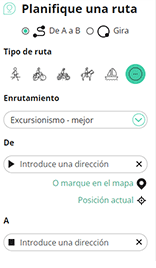
Con RouteYou, es fácil crear tus propios mapas personalizados. Simplemente traza tu ruta, agrega puntos de ruta o nodos, agrega lugares de interés, lugares para comer y beber, y luego compártelo fácilmente con tu familia y amigos.
Planificador de rutas
<iframe src="https://plugin.routeyou.com/poiviewer/free/?language=es&params.poi.id=9014645&params.language=en" width="100%" height="600" frameborder="0" allowfullscreen></iframe>

Más de 10.100.000 rutas

Más de 15.000.000 usuarios

Más de 4.500.000 lugares de interés

Kerkstraat 108
9050 Gentbrugge, Bélgica
Contacte con nuestro equipo de atención al cliente o visite nuestro centro de ayuda.
© 2006-2025 RouteYou - www.routeyou.com