Orchards are not randomly found along the edges of the large rivers. Over time, the rivers have regularly overflowed their banks. In the process, the water carried along sand and clay. The sand, being relatively heavier, sank first, closest to the river. Later, and a bit further away, the clay began to settle. Repeat this many times and you get a natural, broad, and low dike along the rivers. This natural dike is called a river dune. Since these river dunes are made up of sand and loam and are slightly elevated, they are well-drained and provide excellent areas for orchards. You will therefore find them here in large numbers. Naturally, these drier and higher places were also chosen to build villages and lay roads.
Copyright: All rights reserved
 | | Public | Danish • Dutch • French • German • Italian • Spanish

Select one of the most popular activities below or refine your search.
Discover the most beautiful and popular trails in the area, carefully bundled into appropriate selections.
Select one of the most popular categories below or be inspired by our selections.
Discover the most beautiful and popular attractions in the area, carefully bundled in appropriate selections.
With RouteYou, it's easy to create your own customised maps. Simply plot your route, add waypoints or nodes, add places of interest and places to eat and drink, and then easily share it with your family and friends.
Route planner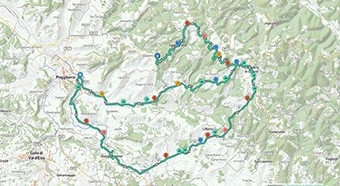

<iframe src="https://plugin.routeyou.com/poiviewer/free/?language=en&params.poi.id=411842" width="100%" height="600" frameborder="0" allowfullscreen></iframe>

More than 11,800,000 routes

More than 15,000,000 users

More than 4,500,000 points of interest

Kerkstraat 108
9050 Gentbrugge, Belgium
© 2006-2026 RouteYou - www.routeyou.com