Fuente: Willem Vandenameele


The Piazza della sala takes its name from the role it played in the days of the Lombards, when the curtis domini regis, or palace of the Gastaldo, stood here.
In later times it became the daily food market. Small shops with wooden doors, stone benches and strongly projecting roofs supported by wooden corbels developed on all sides of the square and in the adjacent streets. The organization of the food market was in the hands of the Opera di San Jacopo, which granted operating licenses and legalized the merchants' land registers, and even controlled the location and arrangement of the stalls, which were allocated by lottery each April.
In 1451 the Opera banned the slaughter of animals in the open air and ordered the construction of a well nearby. The decree stipulated that the exterior of the well should be configured to facilitate the pumping of water: therefore the parapet was replaced by a round marble parapet flanked by two Ionic columns surmounted by an architrave supporting a pulley. Divided into three bands of white and green marble, the architrave was decorated with coats of arms, inscriptions and cornices.
The loggia "con il lastrone dove si vende il pescio", which has now disappeared, was reserved for the sale of fish and gave its name to the current Via del Lastrone. In 1452 the Piazza della Sala was paved.
In 1529, a sandstone lion was placed above the lintel of the well, holding his left paw over the checkered coat of arms of the city, to commemorate Florence's final rule over Pistoia through the Florentine Marzocco. From that moment on, the well was given the name Pozzo del Leoncino.
In 1564 the houses and shops of the Opera di San Iacopo were demolished to build a new palace on the south side. The remaining space was reserved for vegetable sellers. In 1891, permanent covered stalls were built without bothering to provide the market with sanitary facilities. Between 1936 and 1938, the permanent stalls were replaced by masonry stands with rollers, which were damaged by bombing during the war, as well as the well.
In 1954, during the restoration of the Pozzo del Leoncino, a concrete structure was built in the middle of the square to serve as a covered market, which caused a lot of controversy. In 1989 the cage was demolished and the Pozzo del Leoncino was put back in the center of the square, again used for the sale of vegetables.
Fuente: Willem Vandenameele
 | | Pública | Alemán • Español • Francés • Italiano • Neerlandés

Selecciona una de las actividades más populares a continuación o afina tu búsqueda
Descubre las rutas más bonitas y populares de la zona, cuidadosamente agrupadas y seleccionadas.
Fuente: Willem Vandenameele
Selecciona una de las categorías más populares a continuación o inspírate en nuestras selecciones
Descubre los lugares de interés más bonitos y populares de la zona, cuidadosamente agrupados y selecciondos.
Fuente: Willem Vandenameele
Con RouteYou, es fácil crear tus propios mapas personalizados. Simplemente traza tu ruta, agrega puntos de ruta o nodos, agrega lugares de interés, lugares para comer y beber, y luego compártelo fácilmente con tu familia y amigos.
Planificador de rutas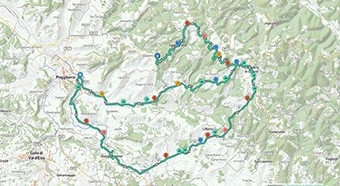
<iframe src="https://plugin.routeyou.com/poiviewer/free/?language=es&params.poi.id=8280188&params.language=en" width="100%" height="600" frameborder="0" allowfullscreen></iframe>

Más de 10.100.000 rutas

Más de 15.000.000 usuarios

Más de 4.500.000 lugares de interés

Kerkstraat 108
9050 Gentbrugge, Bélgica
Contacte con nuestro equipo de atención al cliente o visite nuestro centro de ayuda.
© 2006-2026 RouteYou - www.routeyou.com