Palazzo Taglivia S. Giacomo is a monumental building and one of the most prestigious in Sciacca.
It is characterized by an original mix of architectural styles, from the empire style visible on the south side, to the neo-Gothic that characterizes the facade that stands out above Piazza S. Friscia, with spires, rosettes and lace battlements.
Palazzo Tagliavia was founded in the 15th century and renovated in the 19th century by Giuseppe Tagliavia. He wanted to respect the original fifteenth-century structure.
It is a huge and majestic palace, formed by the great Caryatids that rise high from the sea, along the current Via Vittorio Emanuele, where the monumental entrance once stood. In front of it there used to be a lush garden with jasmine, wisteria and araucarias, overlooking the sea.
The Palazzo Tagliavia di S. Giacomo, at the time of its largest expansion, covered a large area of more than 4,000 square meters between Licata, Vittorio Emanuele, Piazza S. Friscia and Via Bevilacqua streets.
After the division of the estate among the sisters Josephine and Maria Carmela Tagliavia, daughters of the last Marquis of San Giacomo Don Antonino who died at a young age, the palace was divided into two parts around 1960 . The changes that took place in the mid-west of the building due to further hereditary divisions and disinvestments unfortunately irreversibly damaged the old structure , dismembered the old property and deformed the structure by emptying the interiors and building new elevations.
Even the great Salone dell'Aurora was totally destroyed: in its volume two apartments were built, the upper one of which had no windows in the antechambers. There are still some old doors and blinds of the former halls, decorated with pure gold , which today testify to the refinement of the decorations.
Fortunately, during these upheavals, the main facade of Corso Vittorio Emanuele remained intact, even though the old lobby of the main entrance has now been converted into a warehouse, as the old stair access from Corso Vittorio Emanuele has been destroyed. What used to be the courtyard of the palace has today become a communal courtyard with access via Via Licata; The right half of the courtyard has been completely renovated and raised with the construction of several apartments and has the appearance of an anonymous modern condominium. The left side has instead remained with its old neoclassical délabré: the contrast is great.
Around 1955 , Went also destroyed the large garden overlooking the sea, which stretched in front of the palace in the 1960s.
Fuente: Willem Vandenameele
 | | Pública | Alemán • Catalán • Danés • Español • Francés • Italiano • Neerlandés

Selecciona una de las actividades más populares a continuación o afina tu búsqueda
Descubre las rutas más bonitas y populares de la zona, cuidadosamente agrupadas y seleccionadas.
Fuente: welcomesciacca
Selecciona una de las categorías más populares a continuación o inspírate en nuestras selecciones
Descubre los lugares de interés más bonitos y populares de la zona, cuidadosamente agrupados y selecciondos.
Fuente: welcomesciacca
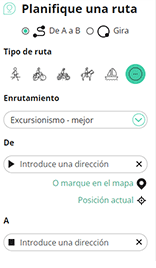
Con RouteYou, es fácil crear tus propios mapas personalizados. Simplemente traza tu ruta, agrega puntos de ruta o nodos, agrega lugares de interés, lugares para comer y beber, y luego compártelo fácilmente con tu familia y amigos.
Planificador de rutas
<iframe src="https://plugin.routeyou.com/poiviewer/free/?language=es&params.poi.id=8664289&params.language=en" width="100%" height="600" frameborder="0" allowfullscreen></iframe>

Más de 11.800.000 rutas

Más de 15.000.000 usuarios

Más de 4.500.000 lugares de interés

Kerkstraat 108
9050 Gentbrugge, Bélgica
© 2006-2026 RouteYou - www.routeyou.com