Après la période d'agriculture dans les parties supérieures, on commença à construire un canal pour amener l'eau du Barranco del Infierno vers les parties inférieures.
De là, l'eau coulait jusqu'à la zone de l'entrée actuelle du Barranco del Infierno , au nord de la ville, près du vieux moulin.
Une fois détourné, le débit de l'eau de la rivière Adeje était utilisé pour approvisionner la population elle-même , pour irriguer les champs de canne à sucre, comme moteur du moulin à sucre et des moulins à eau utilisés pour fabriquer le gofio.
À Adeje, il y avait quatre moulins hydrauliques : deux dans la rue de los Molinos, un à La Concepción et un à Hoya Grande.
Source: Willem Vandenameele
 | | Public | Italien • allemand • anglais • catalan • danois • espagnol • néerlandais

Sélectionnez l'une des activités les plus populaires ci-dessous ou affinez votre recherche
Découvrez les plus beaux et les plus populaires itinéraires du secteur, soigneusement regroupés dans des sélections appropriées.
Sélectionnez l'une des catégories les plus populaires ci-dessous ou inspirez-vous de nos sélections
Découvrez les plus beaux et les plus populaires points d'intérêt du secteur, soigneusement regroupés dans des sélections appropriées.
Avec RouteYou, vous pouvez facilement créer vos propres cartes personnalisées. Tracez votre itinéraire, ajoutez des points de passage ou des points-nœuds, planifiez des points d'intérêt et des lieux de restauration, et partagez le tout avec votre famille et vos amis.
Planificateur d'itinéraire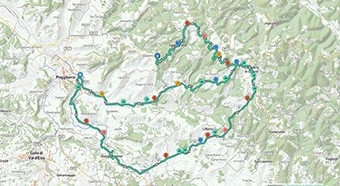
<iframe src="https://plugin.routeyou.com/poiviewer/free/?language=fr&params.poi.id=8705022" width="100%" height="600" frameborder="0" allowfullscreen></iframe>

Plus de 11 800 000 itinéraires

Plus de 15 000 000 d'utilisateurs

Plus de 4 500 000 points d'intérêts

Kerkstraat 108
9050 Gentbrugge, Belgique
© 2006-2026 RouteYou - www.routeyou.com