Fino al XVII secolo, c'erano molte brughiere in questa regione. Nel linguaggio comune si parlava di ‘campo’. Si trattava in realtà di terreni meno adatti all'agricoltura. Il Bulskampveld era la più grande zona di brughiere dall'altra parte di Bruges.
Alla fine del XVIII secolo, la brughiera sterile è stata piantata con conifere. In questo modo, è stato finalmente possibile fare qualcosa di redditizio con questi terreni senza valore. La cintura forestale circostante, un po' più fertile, è stata messa in coltivazione agricola. Il motivo regolare secondo cui i lotti agricoli sono stati disboscati è ancora ben visibile nei sentieri attuali del paesaggio. Il risultato è stato un capovolgimento del paesaggio: la zona di brughiera aperta è stata trasformata in una foresta matura e la zona forestale circostante si è trasformata in terra agricola.
Il governo fiammingo ha acquisito la foresta di Vagevuurbos alla fine del XX secolo in diverse fasi; l'acquisto più importante è avvenuto nel 1998, quando 140 ettari sono stati acquistati dalla famiglia van der Bruggen.
Source: Agentschap Natuur en Bos
 | | Public | allemand • anglais • danois • espagnol • français • néerlandais

Sélectionnez l'une des activités les plus populaires ci-dessous ou affinez votre recherche
Découvrez les plus beaux et les plus populaires itinéraires du secteur, soigneusement regroupés dans des sélections appropriées.
Sélectionnez l'une des catégories les plus populaires ci-dessous ou inspirez-vous de nos sélections
Découvrez les plus beaux et les plus populaires points d'intérêt du secteur, soigneusement regroupés dans des sélections appropriées.
Avec RouteYou, vous pouvez facilement créer vos propres cartes personnalisées. Tracez votre itinéraire, ajoutez des points de passage ou des points-nœuds, planifiez des points d'intérêt et des lieux de restauration, et partagez le tout avec votre famille et vos amis.
Planificateur d'itinéraire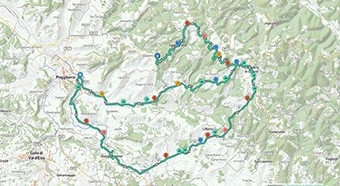
<iframe src="https://plugin.routeyou.com/poiviewer/free/?language=fr&params.poi.id=1267099&params.language=it" width="100%" height="600" frameborder="0" allowfullscreen></iframe>

Plus de 11 800 000 itinéraires

Plus de 15 000 000 d'utilisateurs

Plus de 4 500 000 points d'intérêts

Kerkstraat 108
9050 Gentbrugge, Belgique
© 2006-2026 RouteYou - www.routeyou.com