Closed square farm, initially called "'t Hof ván Prince de Berges" and from the 18th century "Potaardehof". Erected in the third quarter of the 18th century, see facing stone "1768", and modified in the 19th century, replacing an older court. The Potaardehoeve is situated on the Potaardeveld in the extreme southwest of the municipality near the border with Strombeek-Bever and is located between the Maelbeek and the street. Former tenant court of the lords of Grimbergen who gave their name, "'t Hof ván Prince de Berges", to the court at least until the 17th century (see map book of the municipality, 1696 and the abbey, 1699). The farm was located on the southernmost part of the Sprietveld, called the Verste Spriet, where Brussels potters discovered potting soil in the 17th century at the earliest. Gradually the name Verste Spriet was replaced by Potaardeveld and people also started to speak of "Potaerde Hof" (see Vandermaelenkaart circa 1859). According to the current owners in a deed of 1636 described as a mud house with a low-hanging thatched roof. At the end of the 17th century, the farm consisted of three detached, U-shaped volumes (see map books) that evolved into a semi-closed whole in the course of the 18th century (see Ferraris map 1771-1778). In 1768 partially or completely rebuilt with the only witness to this being the gatehouse, the pedestrian passage and a part of the north side façade of the house with year stone. According to a year on a cornerstone, the barn was erected in 1842. Another major renovation campaign probably took place in 1863, see dated gable chapel and was cadastrally drawn in 1866. The house was raised and widened; the cowshed in the extension of the house as well as the right-angled pig houses completely renewed and a two-storey service building built behind the pedestrian passage. In the 1980s, the southwestern stables at the rear were expanded with a potato barn. A riding school was built on the northwest side quite recently. Closed square farmhouse located on the street consisting of partly whitewashed brick buildings under tiled gable roofs with predominantly green painted joinery around a rectangular paved yard with manure pit. To the northeast the gatehouse flanked by a pedestrian gate, extended on the yard side with a service building; to the north-west the house with adjoining cowshed; Perpendicular to this stables that are connected to the southeastern longitudinal barn by means of a round arch gate. Gatehouse with dovecote under renewed tiled gable roof probably from 1768. High round-arched entrance gate with sand-lime frame with regularly placed neg blocks, imposts and an anchored keystone. The schamp poles were preserved. Anchored side facades finished with roof, braids and sand-lime shoulder pieces on ditto consols. The left top piece was removed during the recent renewal of the roof tiles. Identically conceived pedestrian passage to the right of the gate behind which a two-storey building under tiled gable roof was erected circa 1866, allegedly for the "working people". On the yard side, this volume has rectangular openings under wooden lintels and arched stool arches. Perpendicular to the street basement farmhouse of five bays (see wall anchors) and one storey under renewed tiled gable roof. Preserved street façade from 1768, completely renovated in the third quarter of the 19th century. Longitudinal façade on the field side with shuttered and barred round arch windows and ditto door in a new sandstone frame. Façade with originally shuttered rectangular window openings under hard stone lintel and arched relief system and a cross-arched door with bluestone uprights. Side gable on the street with right corner chain and traces of braids indicating an enlargement of the structure. Sand-lime brick "ANNO/1768" above a later (load?) window (see traces of die-irons and two-tiered sill) with ditto frame of profiled corner and neg blocks. Central to the substructure beautiful, white brick Chapel of Our Lady under a gable roof crowned by an elaborate forged iron cross. Round arch with iron gate above a bluestone diamond-shaped stone with the inscription "AVM/1863".
Datenquelle: Van Damme, Marjolijn (2005)
Urheberrechte: All rights reserved
 Azure
Azure | | Öffentlich | Niederländisch
Adresse: Potaarde 131, Grimbergen
Statistiken
Wählen Sie eine der beliebtesten Aktivitäten unten aus oder verfeinern Sie Ihre Suche.
Entdecken Sie die schönsten und beliebtesten Routen in der Gegend, sorgfältig gebündelt in einer passenden Auswahl.
Wählen Sie eine der unten aufgeführten beliebtesten Kategorien oder lassen Sie sich von unserer Auswahl inspirieren.
Entdecken Sie die schönsten und beliebtesten Sehenswürdigkeiten der Gegend, sorgfältig gebündelt in einer entsprechenden Auswahl.
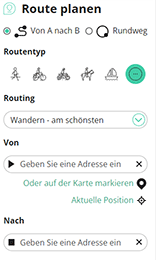
Mit RouteYou kannst du ganz einfach eigene Karten erstellen. Plane deine Route, füge Wegpunkte oder Knotenpunkte hinzu, plane Sehenswürdigkeiten und Einkehrmöglichkeiten ein und teile alles mit Familie und Freunden.
Routenplaner
<iframe src="https://plugin.routeyou.com/poiviewer/free/?language=de&params.poi.id=3158042&params.language=en" width="100%" height="600" frameborder="0" allowfullscreen></iframe>

Mehr als 10.100.000 Routen

Mehr als 15.000.000 Benutzer

Mehr als 4.500.000 Sehenswürdigkeiten

Kerkstraat 108
9050 Gentbrugge,Belgien
Kontaktieren Sie unser Kundendienstteam oder besuchen Sie unser Hilfezentrum.
© 2006-2026 RouteYou - www.routeyou.com