Fuente: Willem Vandenameele
In 1248, King Ferdinand III donated several houses in the Santa María district to the Dominicans. The order founded the Monastery of San Pablo on this site. It was the largest Dominican monastery in Andalusia. In 1649, 85 brothers died as a result of the plague epidemic that devastated the city.
After the Guadalquivir River flooded between 1691 and 1692, the medieval structure collapsed and was eventually demolished to be rebuilt. The building is the result of the reconstruction by Leonardo de Figueroa between 1691 and 1709 , in the most exuberant Baroque style , as the church of the Monastery of San Pablo el Real.
The frontispiece features two vases, a Dominican shield and a bust of Saint Thomas Aquinas. The dome of the transept is the first in the city made on an octagonal drum.
The artistic heritage in the church is impressive for its richness and aesthetic quality. The spectacular cycle of murals, which glorify the Order of Preachers and the Apostolic College as pillars of the church, are the work of painters Lucas Valdés and Clemente de Torres.
The main altarpiece, built in the first third of the 18th century and whose sculpture was probably executed by Pedro Duque Cornejo, must be considered in terms of dimensions the second largest in our city, surpassed only by that of the Cathedral of Seville.
The chapel of the Quinta Angustia with 3 domes is a space dating from between the end of the 14th and the beginning of the 15th century. It was reformed at the beginning of the 18th century, but regained its original physiognomy during a restoration in 1917. In the 15th century it must have been three independent chapels, each with its own dome. This chapel is the headquarters of the Hermandad de la Quinta Angustia (Fraternity of the Fifth Fear). This brotherhood has as titular figures the Jesús del Descendimiento (attributed to Pedro Roldán in 1659) and the Virgen de la Quinta Angustia (Vicente Rodríguez-Caso, 1932).
The Jesús del Descendimiento is a sculpture that shows Christ being taken down from the cross by white cloths that make his body appear to be suspended and the image appears surprisingly realistic .
Fuente: Willem Vandenameele - Wikipedia
 | | Pública | Alemán • Catalán • Danés • Español • Francés • Italiano • Neerlandés

Selecciona una de las actividades más populares a continuación o afina tu búsqueda
Descubre las rutas más bonitas y populares de la zona, cuidadosamente agrupadas y seleccionadas.
Fuente: Willem Vandenameele
Selecciona una de las categorías más populares a continuación o inspírate en nuestras selecciones
Descubre los lugares de interés más bonitos y populares de la zona, cuidadosamente agrupados y selecciondos.
Fuente: Willem Vandenameele
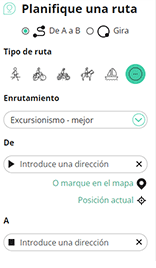
Con RouteYou, es fácil crear tus propios mapas personalizados. Simplemente traza tu ruta, agrega puntos de ruta o nodos, agrega lugares de interés, lugares para comer y beber, y luego compártelo fácilmente con tu familia y amigos.
Planificador de rutas
<iframe src="https://plugin.routeyou.com/poiviewer/free/?language=es&params.poi.id=8740916&params.language=en" width="100%" height="600" frameborder="0" allowfullscreen></iframe>

Más de 10.100.000 rutas

Más de 15.000.000 usuarios

Más de 4.500.000 lugares de interés

Kerkstraat 108
9050 Gentbrugge, Bélgica
Contacte con nuestro equipo de atención al cliente o visite nuestro centro de ayuda.
© 2006-2025 RouteYou - www.routeyou.com