The historic building that houses the Town Hall is one of the most remarkable examples of Renaissance architecture, with beautiful decoration popularly called Plateresque . It is located in Plaza Nueva.
Construction began in the 16th century by Diego de Riaño, the master built the southern sector of the Town Hall, a small building containing only the chapter house, the stop, the old staircase and the room of the faithful executors, next to the arch that communicated with the Franciscan Monastery and two floors covered with Plateresque reliefs depicting historical and mythical figures , heraldry and emblems referring to the city's founders such as Hercules and Julius Caesar.
This headquarters was expanded in the 19th century by Demetrio de los Ríos and Balbino Marrón, who designed a new main facade, facing the Plaza Nueva, in a neoclassical style. In the expansion project, the sculptors designed and directed the carving and reorganized the interior around two patios and a grand staircase.
The two facades of the Town Hall are possibly the most representative artistic elements of this official building. Inside , however, spaces of impressive historical and cultural value have been preserved, such as a beautiful vault with coffered ceiling engraved with images of kings on the ground floor. It currently houses several exhibitions related to the city and has also been converted into a television set for the filming of several scenes from the series La Peste (The Pest).
In the upper chapter house, covered with a wooden alfarje, some of the most important municipal paintings are exhibited, such as the Inmaculada and the portrait of Fray Pedro de Oña, from Zurbarán, The Procession of Santa Clara and The Defeat of the Saracens from Valdés Leal.
Inside the building you can see some of the most important works by Sevillian artists to date, such as the Triptych of the Virgin and Child, Saint Michael and Saint Bartholomew and the Virgin of the Cherries , both anonymous works from the 16th century. Other notable works include Las Santas Justa y Rufina by Juan Espinal or the collection donated by the Montpensier family of paintings from the 19th century.
Fuente: Willem Vandenameele - Wikipedia
 | | Pública | Alemán • Catalán • Danés • Español • Francés • Italiano • Neerlandés

Selecciona una de las actividades más populares a continuación o afina tu búsqueda
Descubre las rutas más bonitas y populares de la zona, cuidadosamente agrupadas y seleccionadas.
Fuente: visitasevilla
Selecciona una de las categorías más populares a continuación o inspírate en nuestras selecciones
Descubre los lugares de interés más bonitos y populares de la zona, cuidadosamente agrupados y selecciondos.
Fuente: visitasevilla
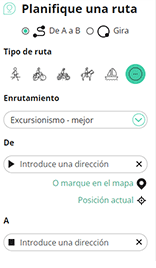
Con RouteYou, es fácil crear tus propios mapas personalizados. Simplemente traza tu ruta, agrega puntos de ruta o nodos, agrega lugares de interés, lugares para comer y beber, y luego compártelo fácilmente con tu familia y amigos.
Planificador de rutas
<iframe src="https://plugin.routeyou.com/poiviewer/free/?language=es&params.poi.id=8750321&params.language=en" width="100%" height="600" frameborder="0" allowfullscreen></iframe>

Más de 10.100.000 rutas

Más de 15.000.000 usuarios

Más de 4.500.000 lugares de interés

Kerkstraat 108
9050 Gentbrugge, Bélgica
Contacte con nuestro equipo de atención al cliente o visite nuestro centro de ayuda.
© 2006-2025 RouteYou - www.routeyou.com