Fuente: GroeneHartstocht


Zwammerdam has a small and compact old core with winding streets and historic buildings. Zwammerdam is, in contrast to ribbon development, one of the few villages in the Rhine region that are built around a square.
In the year 1960, Zwammerdam celebrated its 1000th anniversary. To enter the village, entrance gates were placed in a number of places in the shape of the municipal coat of arms: a castle with a swan on top. In 960 the municipality was referred to as Svattingaburch, which means fortified border town (svat or zwade is border and burch means fortified place). Later, the name was corrupted to Swadeburch. When, in the 12th century, Count Floris III of Holland erected a dam in the Rhine to regulate the water management of his area on the east side, the name Swadenburgerdam arose, which later became Zwammerdam. Since 1971, the statue of Barbarossa has stood on a high pedestal at the end of the Brugstraat, a reminder of the turbulent period that arose after the (illegal) damming. Barbarossa was the nickname of Emperor Frederick I of Germany and feudal lord of the Count of Holland. He mediated in the conflict between Count Floris and the diocese of Utrecht about the situation that had arisen as a result of the damming.
 During the invasion of the French troops in 1672, Zwammerdam was almost razed to the ground by arson. The reconstruction has been energetically started from the only building in the Brug(ge)straat that was spared. Around 1920 Bodegraven made an unsuccessful attempt to claim the territory of Zwammerdam. In this period the "national anthem" was written, which was brought out of the closet again in the sixties of the past century when the government questioned the independence of Zwammerdam. Despite a lot of effort by the inhabitants, the municipality was added to Alphen aan den Rijn in 1964.
Zwammerdam gained worldwide fame in the 1970s when, during excavation work for the construction of the Hooge Burch, 6 Roman ships were uncovered on the site where the castellum Nigrum Pollum once stood. The largest ship was 34 m. long and 4.40 m. wide. A national fundraising campaign was needed to obtain the funds for excavation and conservation. In recent years, the name given to the castellum has been under discussion. Although Zwammerdam has been dissolved as an independent municipality, the Historical Working Group Zwammerdam keeps the past alive and watches over the heritage.
 Azure
Azure | | Pública | Alemán • Danés • Español • Francés • Italiano • Neerlandés

Selecciona una de las actividades más populares a continuación o afina tu búsqueda
Descubre las rutas más bonitas y populares de la zona, cuidadosamente agrupadas y seleccionadas.
Fuente: GroeneHartstocht
Selecciona una de las categorías más populares a continuación o inspírate en nuestras selecciones
Descubre los lugares de interés más bonitos y populares de la zona, cuidadosamente agrupados y selecciondos.
Fuente: GroeneHartstocht
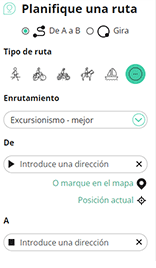
Con RouteYou, es fácil crear tus propios mapas personalizados. Simplemente traza tu ruta, agrega puntos de ruta o nodos, agrega lugares de interés, lugares para comer y beber, y luego compártelo fácilmente con tu familia y amigos.
Planificador de rutas
<iframe src="https://plugin.routeyou.com/poiviewer/free/?language=es&params.poi.id=8173672&params.language=en" width="100%" height="600" frameborder="0" allowfullscreen></iframe>

Más de 10.100.000 rutas

Más de 15.000.000 usuarios

Más de 4.500.000 lugares de interés

Kerkstraat 108
9050 Gentbrugge, Bélgica
Contacte con nuestro equipo de atención al cliente o visite nuestro centro de ayuda.
© 2006-2025 RouteYou - www.routeyou.com