Exmoor is loosely defined as an area of hilly open moorland in west Somerset and north Devon in South West England. It is named after the River Exe, the source of which is situated in the centre of the area, two miles north-west of Simonsbath. Exmoor is more precisely defined as the area of the former ancient royal hunting forest, also called Exmoor, which was officially surveyed 1815–1818 as 18,810 acres (7,610 ha) in extent. The moor has given its name to a National Park, which includes the Brendon Hills, the East Lyn Valley, the Vale of Porlock and 55 km (34 mi) of the Bristol Channel coast. The total area of the Exmoor National Park is 692.8 km2 (267.5 sq mi), of which 71% is in Somerset and 29% in Devon.
The upland area is underlain by sedimentary rocks dating from the Devonian and early Carboniferous periods with Triassic and Jurassic age rocks on lower slopes. Where these reach the coast, cliffs are formed which are cut with ravines and waterfalls. It was recognised as a heritage coast in 1991. The highest point on Exmoor is Dunkery Beacon; at 519 metres (1,703 ft) it is also the highest point in Somerset. The terrain supports lowland heath communities, ancient woodland and blanket mire which provide habitats for scarce flora and fauna. There have also been reports of the Beast of Exmoor, a cryptozoological cat roaming Exmoor. Several areas have been designated as Nature Conservation Review and Geological Conservation Review sites.
There is evidence of human occupation from the Mesolithic. This developed for agriculture and extraction of mineral ores into the bronze and Iron Ages. The remains of standing stones, cairns and bridges can still be identified. The royal forest was granted a charter in the 13th century, however foresters who managed the area were identified in the Domesday Book. In the Middle Ages sheep farming was common with a system of agistment licensing the grazing of livestock as the Inclosure Acts divided up the land. The area is now used for a range of recreational purposes.
Source: Wikipedia
 | | Public | néerlandais

Sélectionnez l'une des activités les plus populaires ci-dessous ou affinez votre recherche
Découvrez les plus beaux et les plus populaires itinéraires du secteur, soigneusement regroupés dans des sélections appropriées.
Source: http://en.wikipedia.org/wik...
Sélectionnez l'une des catégories les plus populaires ci-dessous ou inspirez-vous de nos sélections
Découvrez les plus beaux et les plus populaires points d'intérêt du secteur, soigneusement regroupés dans des sélections appropriées.
Source: http://en.wikipedia.org/wik...
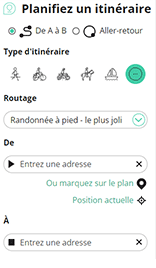
Avec RouteYou, vous pouvez facilement créer vos propres cartes personnalisées. Tracez votre itinéraire, ajoutez des points de passage ou des points-nœuds, planifiez des points d'intérêt et des lieux de restauration, et partagez le tout avec votre famille et vos amis.
Planificateur d'itinéraire
<iframe src="https://plugin.routeyou.com/poiviewer/free/?language=fr&params.poi.id=7274929&params.language=en" width="100%" height="600" frameborder="0" allowfullscreen></iframe>

Plus de 10 100 000 itinéraires

Plus de 15 000 000 d'utilisateurs

Plus de 4 500 000 points d'intérêts

Kerkstraat 108
9050 Gentbrugge, Belgique
Contactez notre équipe de support client ou visitez notre centre d'aide.
© 2006-2026 RouteYou - www.routeyou.com