The North Pole is moving as a result of the melting of glaciers and ice sheets. Since observations began in 1899, the North Pole has been heading southwards 10 centimeters per year along longitude 70° west. This is due to the thaw following the last ice age: the melting of the glaciers lets the crust rebound, redistributing Earth's mass and leading to subtle changes in its axis of rotation. But recent effects of global warming started to kick in, as Jianli Chen of the University of Texas at Austin showed. Since 2005, the pole suddenly began moving eastwards by 1.2 metres to date. This was established using the data of the GRACE satellite which measures changes in Earth's gravity field.
Bron: NewScientist, 21 December 2013, p.12
| Publiek | Nederlands

Selecteer hieronder één van de populairste activiteiten of verfijn je zoekopdracht.
Ontdek de mooiste en meest populaire routes in de buurt, zorgvuldig gebundeld in passende selecties.
Selecteer hieronder één van de populairste categorieën of laat je inspireren door onze selecties.
Ontdek de mooiste en meest populaire bezienswaardigheden in de buurt, zorgvuldig gebundeld in passende selecties.
Met RouteYou kan je eenvoudig zelf aangepaste kaarten maken. Stippel je route uit, voeg waypoints of knooppunten toe, plan bezienswaardigheden en eet- en drinkgelegenheden in en deel alles met je familie en vrienden.
Routeplanner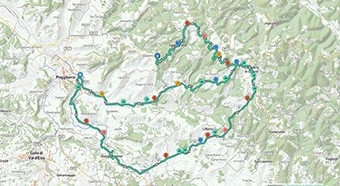
<iframe src="https://plugin.routeyou.com/poiviewer/free/?language=nl&params.poi.id=1418422&params.language=en" width="100%" height="600" frameborder="0" allowfullscreen></iframe>

Meer dan 10.100.000 routes

Meer dan 15.000.000 gebruikers

Meer dan 4.500.000 trekpleisters

Kerkstraat 108
9050 Gentbrugge, België
Neem contact op met ons klantenserviceteam of bezoek ons helpcentrum.
© 2006-2025 RouteYou - www.routeyou.com