Datenquelle: Schlusmans, Frieda, 01-01-2005, ©Vlaamse Gemeenschap
Urheberrechte: All rights reserved


The Verschuylenhof or Olmenhof is one of the first clearings in Rotem. First mentioned in 1371, when a beguine, Agnes, renounced her laathof, equipped with two watermills, in favor of Jan Oems, lord of Bochoven, seneschal of Maaseik. The estate subsequently came into the possession of the families of Baer (1509) and Eyll (1607). In 1721, Petrus Philippus de Verschuyl is mentioned as lord of Rotem and owner of the Olmenhof. Former U-shaped farm, designated as such on the Ferraris map (1771-77) and in the Atlas of the Neighborhood Roads (1846), with the open side of the yard facing east. Currently with detached components. Set back from the street, with an orchard between the street and the farm. Only fragments of the old core have been preserved in the barn. The other buildings date from the late 19th to early 20th century. Agricultural residence of the double house type, three bays, and two storeys under a gable roof (mechanical tiles). Brick building, equipped with pilasters and drop motifs. Semi-circular, barred windows. Rectangular door in a limestone frame. Gable walls with gable ends and shoulders. Adjacent to the left gable, L-shaped stable under a mansard roof (mechanical tiles). Brick building, featuring arched and round-arched openings. In the northwest gable, a heavily weathered limestone plaque with the coat of arms of the Verschuyl family, from the first half of the 18th century. Adjacent lower stables. To the right of the courtyard, the remnants of the barn, almost completely renovated. In the northwest gable, a well-preserved limestone plaque as described above. A number of large, recent stables. Behind the farm, the "Bergkelder." Remnants of a marlstone keep, once surrounded by a moat, likely fed by the old Meuse, and presumably dating from the 14th or first half of the 15th century. The whole was excavated around 1935 to fill in the moats. It is possibly the primitive site of Olmenhof/Verschuylenhof or Kessel/Biessenhof/Ommerstein. The rectangular building is still only one storey high. This storey includes two cellars, of which the western one retained its marlstone barrel vault. In the other cellar are the remnants of the staircase to the entrance on the upper level. The door between both cellars was renovated but is still in its original position.
Datenquelle: Schlusmans, Frieda (2005)
Urheberrechte: All rights reserved
 | | Öffentlich | Deutsch • Dänisch • Französisch • Italienisch • Niederländisch • Spanisch
Adresse: de Schiervellaan 5, Dilsen-Stokkem
Statistiken
Wählen Sie eine der beliebtesten Aktivitäten unten aus oder verfeinern Sie Ihre Suche.
Entdecken Sie die schönsten und beliebtesten Routen in der Gegend, sorgfältig gebündelt in einer passenden Auswahl.
Datenquelle: Schlusmans, Frieda, 01-01-2005, ©Vlaamse Gemeenschap
Urheberrechte: All rights reserved
Wählen Sie eine der unten aufgeführten beliebtesten Kategorien oder lassen Sie sich von unserer Auswahl inspirieren.
Entdecken Sie die schönsten und beliebtesten Sehenswürdigkeiten der Gegend, sorgfältig gebündelt in einer entsprechenden Auswahl.
Datenquelle: Schlusmans, Frieda, 01-01-2005, ©Vlaamse Gemeenschap
Urheberrechte: All rights reserved
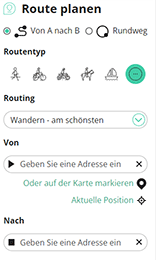
Mit RouteYou kannst du ganz einfach eigene Karten erstellen. Plane deine Route, füge Wegpunkte oder Knotenpunkte hinzu, plane Sehenswürdigkeiten und Einkehrmöglichkeiten ein und teile alles mit Familie und Freunden.
Routenplaner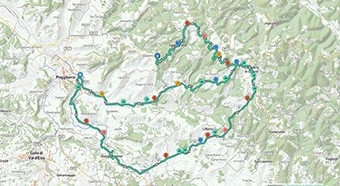
<iframe src="https://plugin.routeyou.com/poiviewer/free/?language=de&params.poi.id=3183430&params.language=en" width="100%" height="600" frameborder="0" allowfullscreen></iframe>

Mehr als 11.800.000 Routen

Mehr als 15.000.000 Benutzer

Mehr als 4.500.000 Sehenswürdigkeiten

Kerkstraat 108
9050 Gentbrugge,Belgien
© 2006-2026 RouteYou - www.routeyou.com