Source: Willem Vandenameele
In 1964 the church was consecrated as a basilica and it is a pure jewel of Gothic art.
Few cities in France can boast of having given Christianity a pope. The Champagne region is the exception, with two popes: Urban II, born in 1042 in Châtillon (Marne), and Urban IV , born in 1185 in Troyes in a house that disappeared to make way for the church of Saint-Urbain. The future Urban IV was called Jacques Pantaléon. The son of a Trojan shoemaker, he studied briefly at the cathedral school and then left to study theology at the Sorbonne (Paris) around 1200. In 1261, before he was made a cardinal, he was elected pope and took the name Urban IV. However, he never settled in Rome: he died and was buried in 1264 in the cathedral of Saint-Laurent in Perugia, although he had expressed the wish to be buried in Troyes in his beloved church.
Pope Urban IV never forgot his native city: in 1261, he decided to build a magnificent collegiate church on the site of his father's old shop. He commissioned the architect Jean Langlois and sent him a fabulous sum of money. The work began immediately, despite fierce opposition from the nuns of the Notre-Dame-aux-Nonnains abbey, who were unhappy about the construction of a new church within their jurisdiction. The collegiate church of Saint-Urbain was not consecrated until 1389, still unfinished, and the upper part of the nave was only completed at the end of the 19th century by the architect Selmersheim, respecting the original plan.
Saint-Urbain is a masterpiece of Gothic art with its beautiful proportions, stone lacework and immense stained glass windows and is known as " the Parthenon of Champagne". The great portal , which occupies the entire western part of the building, was completed in 1905, but the tympanum, with a magnificent Last Judgement , dates from the 13th century.
As you enter the church, you are struck by the elegance, sobriety and luminosity of the place. The astonishingly light transept and choir have retained their beautiful original stained glass windows, dating from around 1270 and restored in 1992 by the Le Vitrail workshops in Troyes. The sculpture is also admirable, in particular the famous Vierge aux Raisins (Virgin of the Grapes) in the chapel of the south aisle, whose delicacy and contemplation are typical of the 16th-century Trojan school.
In 1935 the remains of Urban IV were transferred to the church, which was given the title of basilica in 1964.
Source: Willem Vandenameele
 | | Public | Italien • allemand • catalan • espagnol • français • néerlandais

Sélectionnez l'une des activités les plus populaires ci-dessous ou affinez votre recherche
Découvrez les plus beaux et les plus populaires itinéraires du secteur, soigneusement regroupés dans des sélections appropriées.
Source: Willem Vandenameele
Sélectionnez l'une des catégories les plus populaires ci-dessous ou inspirez-vous de nos sélections
Découvrez les plus beaux et les plus populaires points d'intérêt du secteur, soigneusement regroupés dans des sélections appropriées.
Source: Willem Vandenameele
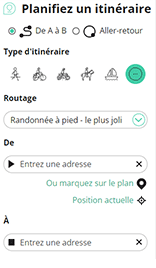
Avec RouteYou, vous pouvez facilement créer vos propres cartes personnalisées. Tracez votre itinéraire, ajoutez des points de passage ou des points-nœuds, planifiez des points d'intérêt et des lieux de restauration, et partagez le tout avec votre famille et vos amis.
Planificateur d'itinéraire
<iframe src="https://plugin.routeyou.com/poiviewer/free/?language=fr&params.poi.id=8773763&params.language=en" width="100%" height="600" frameborder="0" allowfullscreen></iframe>

Plus de 10 100 000 itinéraires

Plus de 15 000 000 d'utilisateurs

Plus de 4 500 000 points d'intérêts

Kerkstraat 108
9050 Gentbrugge, Belgique
Contactez notre équipe de support client ou visitez notre centre d'aide.
© 2006-2026 RouteYou - www.routeyou.com