The British Parliament voted a remarkable law in 1714. The need to avoid catastrophes and reduce the huge financial losses suffered by merchant shipping companies became so urgent that on 8 July 1714 the British Parliament passed the Longitude Act. The government offered a prize of £ 20,000 for a way of finding a ship's longitude to within half a degree, or about 50 kilometres. One man who rose to the challenge was an unassuming Yorkshire clockmaker. ... John Harrison's solution was to build a sea clock, or 'chronometer'. Possessing such a device, a mariner could, in Sobel's words, 'carry the true time from a home port, like an eternal flame, to any corner of the world'. To calculate his longitude at sea, he need only compare the chronometer's time with local time; if for instance, the Sun rose an hour earlier than at the port, then the ship must have sailed 1/24 of the way round the Earth, or about 1700 kilometres.
 | | Public | Danish • Dutch • French • German • Italian • Spanish

Select one of the most popular activities below or refine your search.
Discover the most beautiful and popular trails in the area, carefully bundled into appropriate selections.
Select one of the most popular categories below or be inspired by our selections.
Discover the most beautiful and popular attractions in the area, carefully bundled in appropriate selections.
With RouteYou, it's easy to create your own customised maps. Simply plot your route, add waypoints or nodes, add places of interest and places to eat and drink, and then easily share it with your family and friends.
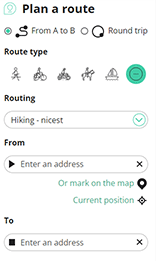
Route planner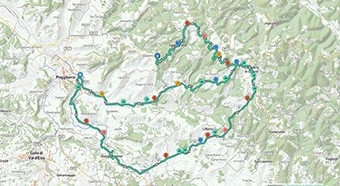
<iframe src="https://plugin.routeyou.com/poiviewer/free/?language=en&params.poi.id=406385" width="100%" height="600" frameborder="0" allowfullscreen></iframe>

More than 11,800,000 routes

More than 15,000,000 users

More than 4,500,000 points of interest

Kerkstraat 108
9050 Gentbrugge, Belgium
© 2006-2026 RouteYou - www.routeyou.com