Font: Willem Vandenameele


Opposite the Duomo in Siena is the complex of Santa Maria della Scala, one of the oldest hospitals in Europe and now a museum, with beautiful frescoes and works of art.
In the complex of Santa Maria della Scala you will also find the Museo Archeologico Nazionale, with the relics from Constantinople that the hospital bought from Venice in 1359 and a special collection of twelve flags that made the different contrade, districts, of Siena in 1884 for the Palio.
Santa Maria della Scala was one of the first European hospitals. In the early days it served as a shelter for sick and weary pilgrims and for orphans and poor inhabitants of Siena. The hospital was run by the canons of the Duomo and later by the municipality of Siena.
Thanks to generous donations from noble families in Siena and other wealthy residents who were kind to the hospital, the complex of Santa Maria della Scala grew larger and more prosperous. Not only did they have enough money to care for the sick, they also owned large tracts of their own land and acquired many beautiful works of art and relics.
The generous donors commissioned local artists to decorate parts of the hospital. Some of these frescoes can still be admired in the museum. Perhaps the best part is the part that still shows what the hospital used to look like, with separate rooms for men and women. You can still see exactly where the beds were, with a niche for a jug of water next to them.
The frescoes on the ground floor are also breathtakingly beautiful. In the so-called Pellegrinaio, the Hall of the Pilgrims, Domenico di Bartolo, Lorenzo di Pietra and Priamo della Quercia painted the history of Santa Maria della Scala.
On the same floor you will also find the Santissima Annunziata, a church that is part of the complex, the Sacrestia Vecchia, the Cappella della Madonna, the Cappella del Manto and the Cappella delle Fanciulle. Each and every one of these spaces where your jaw will drop in amazement, because of the beautiful frescoes and paintings that you will see.
One floor below, in the former grain store of the hospital, the original parts of the Fonte Gaia are exhibited. A replica of this fountain sparkles in Piazza del Campo. The Fonte Gaia is a design by Jacopo della Quercia, who spent years working on the marble Madonnas, wolves and other decorations for the fountain.
Font: Willem Vandenameele
 | | Pública | Alemany • Danès • Espanyol • Francès • Italià • Neerlandès

Seleccioneu una de les activitats més populars a continuació o perfeccioneu la cerca.
Descobriu les rutes més boniques i conegudes de la zona, acuradament agrupades en seleccions adequades.
Font: Willem Vandenameele
Seleccioneu una de les categories més populars a continuació o inspira't en les nostres seleccions.
Descobriu els llocs d'interès més bonics i coneguts de la zona, acuradament agrupats en seleccions adequades.
Font: Willem Vandenameele
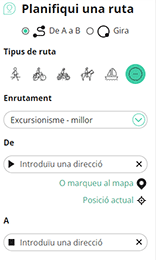
Amb RouteYou pots crear mapes personalitzats molt fàcilment. Defineix la teva ruta, afegeix waypoints o interseccions, planifica parades a punts d'interès o a establiments per menjar i beure i comparteix-ho tot amb els amics i la família.
Planificador de rutes
<iframe src="https://plugin.routeyou.com/poiviewer/free/?language=ca&params.poi.id=8280790&params.language=en" width="100%" height="600" frameborder="0" allowfullscreen></iframe>

Més de 10.100.000 rutes

Més de 15.000.000 usuaris

Més de 4.500.000 llocs d'interès

Kerkstraat 108
9050 Gentbrugge, Bèlgica
Contacteu amb el nostre equip d'atenció al client o visiteu el nostre centre d'ajuda.
© 2006-2026 RouteYou - www.routeyou.com