Datenquelle: Groenehartstocht
On the northwest side of the historical city of IJsselstein stands an old round tower. It is the last remnant of the large medieval castle at this location, which was also called IJsselstein. It is believed that in the second half of the thirteenth century, Gijsbrecht van Amstel, who first referred to himself as Van IJsselstein in 1279, built the first castle here. Naturally, the castle played an important role in the power politics of the descendants of the Van Amstel family. It experienced several sieges and in 1417 the castle was completely destroyed. Only half a century later did the castle undergo reconstruction. The castle was usually inhabited by the drost, who represented the interests of the lords of IJsselstein on site.
The (new) IJsselstein castle was built in several phases into a large fortress. The oldest part is believed to have been built around 1475. Count Floris, a descendant of the Van Egmond family who acquired the Barony of IJsselstein after the Van Amstels, expanded the castle between 1527 and 1531. This was likely done according to the design of architect Rombout II Keldermans, who also worked on other castles for the count. At right angles to the existing residential tower, a gallery was built with the still existing round tower. Around 1600, a part of the gallery was converted into a residential wing. In the eighteenth century, the architectural condition of the castle deteriorated. Parts collapsed or were demolished. In the middle of the eighteenth century, the castle as it stood at that time was renovated.
It was through Guyotte van Amstel, who gained control of IJsselstein in 1364, that the castle came into the hands of the powerful Van Egmond family. She was married to Jan I van Egmond, who was one of the key administrators of Holland and was significantly responsible for instigating the Hoekse and Kabeljauwse conflicts. After the death in 1558 of Anna van Egmond, married to William I of Orange, the rights and properties came into the possession of the House of Orange-Nassau. In 1795, the properties of the Oranges in the country were seized by the French. The castle was confiscated in 1798, along with all other properties of Prince William V, and thus became state property.
After a period of vacancy, the state sold the castle in 1812 to jhr. mr. N.H. Strick van Linschoten, lord of Bunnik and Vechten. The heirs of his daughter sold the castle in 1887 for demolition. Attempts to persuade the state or the royal family—the king was still the titular lord of IJsselstein—to preserve the castle failed. In 1888, the castle was demolished, except for the existing round tower.
Datenquelle: RHC streekarchief
 | | Öffentlich | Deutsch • Dänisch • Französisch • Italienisch • Niederländisch • Spanisch

Wählen Sie eine der beliebtesten Aktivitäten unten aus oder verfeinern Sie Ihre Suche.
Entdecken Sie die schönsten und beliebtesten Routen in der Gegend, sorgfältig gebündelt in einer passenden Auswahl.
Datenquelle: Groenehartstocht
Wählen Sie eine der unten aufgeführten beliebtesten Kategorien oder lassen Sie sich von unserer Auswahl inspirieren.
Entdecken Sie die schönsten und beliebtesten Sehenswürdigkeiten der Gegend, sorgfältig gebündelt in einer entsprechenden Auswahl.
Datenquelle: Groenehartstocht
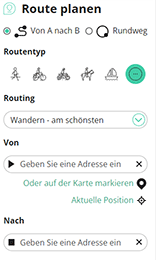
Mit RouteYou kannst du ganz einfach eigene Karten erstellen. Plane deine Route, füge Wegpunkte oder Knotenpunkte hinzu, plane Sehenswürdigkeiten und Einkehrmöglichkeiten ein und teile alles mit Familie und Freunden.
Routenplaner
<iframe src="https://plugin.routeyou.com/poiviewer/free/?language=de&params.poi.id=8194523&params.language=en" width="100%" height="600" frameborder="0" allowfullscreen></iframe>

Mehr als 10.100.000 Routen

Mehr als 15.000.000 Benutzer

Mehr als 4.500.000 Sehenswürdigkeiten

Kerkstraat 108
9050 Gentbrugge,Belgien
Kontaktieren Sie unser Kundendienstteam oder besuchen Sie unser Hilfezentrum.
© 2006-2026 RouteYou - www.routeyou.com