The North Pole is moving as a result of the melting of glaciers and ice sheets. Since observations began in 1899, the North Pole has been heading southwards 10 centimeters per year along longitude 70° west. This is due to the thaw following the last ice age: the melting of the glaciers lets the crust rebound, redistributing Earth's mass and leading to subtle changes in its axis of rotation. But recent effects of global warming started to kick in, as Jianli Chen of the University of Texas at Austin showed. Since 2005, the pole suddenly began moving eastwards by 1.2 metres to date. This was established using the data of the GRACE satellite which measures changes in Earth's gravity field.
Font: NewScientist, 21 December 2013, p.12
| Pública | Neerlandès

Seleccioneu una de les activitats més populars a continuació o perfeccioneu la cerca.
Descobriu les rutes més boniques i conegudes de la zona, acuradament agrupades en seleccions adequades.
Seleccioneu una de les categories més populars a continuació o inspira't en les nostres seleccions.
Descobriu els llocs d'interès més bonics i coneguts de la zona, acuradament agrupats en seleccions adequades.
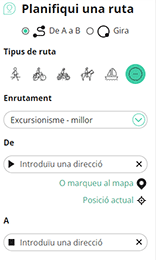
Amb RouteYou pots crear mapes personalitzats molt fàcilment. Defineix la teva ruta, afegeix waypoints o interseccions, planifica parades a punts d'interès o a establiments per menjar i beure i comparteix-ho tot amb els amics i la família.
Planificador de rutes
<iframe src="https://plugin.routeyou.com/poiviewer/free/?language=ca&params.poi.id=1418422&params.language=en" width="100%" height="600" frameborder="0" allowfullscreen></iframe>

Més de 10.100.000 rutes

Més de 15.000.000 usuaris

Més de 4.500.000 llocs d'interès

Kerkstraat 108
9050 Gentbrugge, Bèlgica
Contacteu amb el nostre equip d'atenció al client o visiteu el nostre centre d'ajuda.
© 2006-2025 RouteYou - www.routeyou.com