Datenquelle: Willem Vandenameele
The Teatro Massimo Vittorio Emanuele is the largest opera house in Italy and one of the largest in Europe after the Opéra National in Paris and the Staatsoper in Vienna.
State rooms, halls, galleries and monumental staircases surround the theater proper, forming an architectural complex of grandiose proportions.
The theater took its place between the old core of the city and the new northern extension through radical demolition works that, in addition to parts of the city walls , also affected the Aragonese quarter, to the west, and the monastery complexes of S. Giuliano and the Stigmata .
Work began in 1875. All the masonry is in cut stone, from the foundations to the framework of the floors, including all external decoration. About one hundred and fifty master carvers were employed for the construction. A revolutionary crane was also used, powered by a steam engine and characterized by an ingenious system of pulleys and cables. This was used effectively and successfully during the construction of the Teatro Massimo for lifting the large boulders, capitals and columns. With a lifting capacity of up to eight tons and considerable heights of up to 22 meters for that time, this was a technical tour de force.
At the top, the building is dominated by a huge semicircular dome . The dome's framework is a reticular metal structure that rests on a system of rollers so that it can move in response to temperature changes .
In the rotunda of the southern or Pompeian room, the room originally reserved for men, one can observe a very special resonance effect . Anyone standing exactly in the middle of the room gets the impression that their own voice is amplified out of all proportion, while in the rest of the environment the resonance is enormous and such that it is impossible to understand from outside the rotunda what is happening inside. is being said.
In 1997 the theater reopened after a very long period of vacancy, which began in 1974 due to a delayed restoration.
The theater, which has always been very sensitive to the demands of the LGBT community , signed an agreement with the unions in August 2015 giving its gay employees the right to use marital leave for marriages and civil unions, which elsewhere is only provided for straight marriages. It is the first Italian theater to put homosexual employees on an equal footing with heterosexual employees . To coincide with Pride week , it illuminates the imposing columns of its facade with the colors of the rainbow flag.
In 1990 the theater was the setting for part of the filming of Francis Ford Coppola's The Godfather - Part III, starring Al Pacino, in which Godfather Michael Corleone travels to Palermo to attend his son's debut in Pietro Mascagni's Cavalleria rusticana live.
Datenquelle: Willem Vandenameele - Wikipedia
 | | Öffentlich | Deutsch • Französisch • Italienisch • Katalanisch • Niederländisch • Spanisch

Wählen Sie eine der beliebtesten Aktivitäten unten aus oder verfeinern Sie Ihre Suche.
Entdecken Sie die schönsten und beliebtesten Routen in der Gegend, sorgfältig gebündelt in einer passenden Auswahl.
Datenquelle: Willem Vandenameele
Wählen Sie eine der unten aufgeführten beliebtesten Kategorien oder lassen Sie sich von unserer Auswahl inspirieren.
Entdecken Sie die schönsten und beliebtesten Sehenswürdigkeiten der Gegend, sorgfältig gebündelt in einer entsprechenden Auswahl.
Datenquelle: Willem Vandenameele
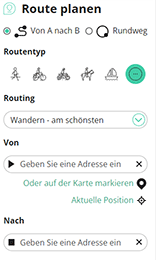
Mit RouteYou kannst du ganz einfach eigene Karten erstellen. Plane deine Route, füge Wegpunkte oder Knotenpunkte hinzu, plane Sehenswürdigkeiten und Einkehrmöglichkeiten ein und teile alles mit Familie und Freunden.
Routenplaner
<iframe src="https://plugin.routeyou.com/poiviewer/free/?language=de&params.poi.id=8655027&params.language=en" width="100%" height="600" frameborder="0" allowfullscreen></iframe>

Mehr als 10.100.000 Routen

Mehr als 15.000.000 Benutzer

Mehr als 4.500.000 Sehenswürdigkeiten

Kerkstraat 108
9050 Gentbrugge,Belgien
Kontaktieren Sie unser Kundendienstteam oder besuchen Sie unser Hilfezentrum.
© 2006-2025 RouteYou - www.routeyou.com