Source: Jan Rymenams


Il bacino interno ed esterno sono collegati tra loro dal Grande Canale di Leigracht. I bacini possono essere separati l'uno dall'altro da questo sbarramento a ghigliottina. Sollevando questo, si riempie solo il bacino interno. Se necessario, lo sbarramento viene controllato e abbassato, in modo che anche il bacino esterno possa essere riempito in corrispondenza delle mura di Diest.
Per svuotare il bacino interno, bisogna ristabilire la connessione e abbassare la valvola. L'acqua scorre ora attraverso il Grande Canale di Leigracht e il sifone di cui parleremo più tardi, sotto il Demer e viene scaricata nel Beek Nero. Per ricordartelo: non arriva una goccia d'acqua dal Demer nel bacino di attesa. Solo l'acqua dei rami secondari importanti, come il Beek delle Beguine, viene raccolta nel bacino.
Qui è stata recentemente (2023) prevista una torre di osservazione.
Source: Agentschap Natuur en Bos en Vlaamse Milieu Maatschappij
 | | Public | Danish • Dutch • English • French • German • Spanish

Select one of the most popular activities below or refine your search.
Discover the most beautiful and popular trails in the area, carefully bundled into appropriate selections.
Source: Jan Rymenams
Select one of the most popular categories below or be inspired by our selections.
Discover the most beautiful and popular attractions in the area, carefully bundled in appropriate selections.
Source: Jan Rymenams
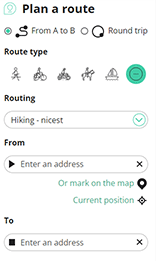
With RouteYou, it's easy to create your own customised maps. Simply plot your route, add waypoints or nodes, add places of interest and places to eat and drink, and then easily share it with your family and friends.
Route planner
<iframe src="https://plugin.routeyou.com/poiviewer/free/?language=en&params.poi.id=7461324&params.language=it" width="100%" height="600" frameborder="0" allowfullscreen></iframe>

More than 10,100,000 routes

More than 15,000,000 users

More than 4,500,000 points of interest

Kerkstraat 108
9050 Gentbrugge, Belgium
© 2006-2025 RouteYou - www.routeyou.com