The village of Slijpe was initially called Arleboudskapelle. It was established when Lord Arleboud built a chapel in honor of St. Nicholas around 1100. That Arleboudskapelle was not just a private chapel by a court, around which a small village center grew organically, we learn from old maps. They show that the village and the chapel were founded on a large, subdivided block plot amid four manorial lands of the Count of Flanders. Arleboudskapelle seems to have been something like a "manorial main village," almost as a counterpart to the free main village of Leffinge further on. The block plot itself was divided into three east-west oriented strips, which were split in two by a north-south axis, resulting in the block being divided into six smaller parcels. The church appeared on the north-west parcel, while the other parcels were designated for habitation. The large village plot was surrounded by roads, along which there was also development in the 16th century (and probably earlier). The rational, systematic concept of the village of Arleboudskapelle perfectly matches that of other villages established in the High Middle Ages. The name 'Sclipis,' which means mudflat area, was the term used long before the founding of Arleboudskapelle to refer to the entire area that was influenced by the tides. During the 14th century, Arleboudskapelle adopted the name of the surrounding area in the form of Slypen, which then evolved into Slijpe. In the streets around the church, one can still sense the medieval atmosphere: although the village was largely destroyed during World War I, the old parcel boundaries were respected during the reconstruction. These small narrow streets date back to the subdivision around 1100. Especially Sint-Niklaasstraat and Paddenstraat give a good idea of this.
 | | Pública | Alemán • Danés • Español • Francés • Italiano • Neerlandés

Selecciona una de las actividades más populares a continuación o afina tu búsqueda
Descubre las rutas más bonitas y populares de la zona, cuidadosamente agrupadas y seleccionadas.
Fuente: LimoWreck
Selecciona una de las categorías más populares a continuación o inspírate en nuestras selecciones
Descubre los lugares de interés más bonitos y populares de la zona, cuidadosamente agrupados y selecciondos.
Fuente: LimoWreck
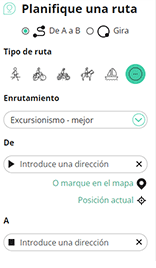
Con RouteYou, es fácil crear tus propios mapas personalizados. Simplemente traza tu ruta, agrega puntos de ruta o nodos, agrega lugares de interés, lugares para comer y beber, y luego compártelo fácilmente con tu familia y amigos.
Planificador de rutas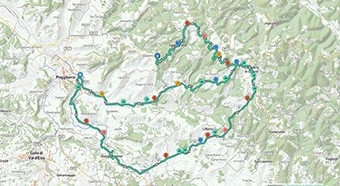
<iframe src="https://plugin.routeyou.com/poiviewer/free/?language=es&params.poi.id=860224&params.language=en" width="100%" height="600" frameborder="0" allowfullscreen></iframe>

Más de 10.100.000 rutas

Más de 15.000.000 usuarios

Más de 4.500.000 lugares de interés

Kerkstraat 108
9050 Gentbrugge, Bélgica
Contacte con nuestro equipo de atención al cliente o visite nuestro centro de ayuda.
© 2006-2025 RouteYou - www.routeyou.com