Fuente: GroeneHartstocht
Around 1150 there was already wooden construction on the site where today's Kampen is located, but the name Kampen is only mentioned in history in 1277. The city has had city rights since 1236. The favorable location on the busy trade route between the Zuiderzee and the Rhine meant that Kampen quickly developed from a simple settlement into a prosperous trading city that would grow into one of the most powerful and leading cities in Northwest Europe.
From 1430 onwards, the silting up of the IJssel very gradually put an end to the prosperity of Kampen. For a long time Kampen did not want to be obliged to an alliance and to make economic and political concessions to other cities, as was customary in the Hanseatic League. When the County of Holland waged war against the Hanseatic League, this situation came to an end: the city was forced to choose one of the two sides. Kampen was originally more oriented towards Baltic sea trade and trade with the hinterland of the Rhine, and therefore formally joined the Hanseatic League in 1441. The city had a lot of influence within the Hanseatic League: despite loud protests from downstream cities on the IJssel and other Hanseatic cities, it was decided in 1448 to build a bridge over the IJssel. This job was completed in a record time of 5 months. With this bridge, Kampen hoped to have more ties with the hinterland.
On 11 August 1572 Kampen was conquered from the Spanish by Willem van den Bergh, a brother-in-law of William of Orange. However, after the Zutphen massacre on 15 November, the city voluntarily surrendered to the Spaniards. In 1578 the city came back into State hands after the Siege of Kampen, led by George van Lalaing.
The Dutch War, between the Republic of the United Netherlands and England and France, meant a definitive end to the enormous power of the city.
From about 1815, the tobacco industry determined the face of Kampen. This branch of industry was attracted by, among other things, the favorable tax climate in the city. After the arrival of two smaller tobacco factories, the large Bremen-based cigar manufacturer Lehmkuhl settled in the city. Around 1880, almost half of the Kamper population was employed in the tobacco industry and 1.5 million cigars were produced per week.
Fuente: Wikipedia
 Azure
Azure | | Pública | Alemán • Danés • Español • Francés • Italiano • Neerlandés

Selecciona una de las actividades más populares a continuación o afina tu búsqueda
Descubre las rutas más bonitas y populares de la zona, cuidadosamente agrupadas y seleccionadas.
Fuente: GroeneHartstocht
Selecciona una de las categorías más populares a continuación o inspírate en nuestras selecciones
Descubre los lugares de interés más bonitos y populares de la zona, cuidadosamente agrupados y selecciondos.
Fuente: GroeneHartstocht
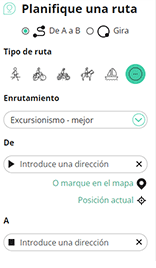
Con RouteYou, es fácil crear tus propios mapas personalizados. Simplemente traza tu ruta, agrega puntos de ruta o nodos, agrega lugares de interés, lugares para comer y beber, y luego compártelo fácilmente con tu familia y amigos.
Planificador de rutas
<iframe src="https://plugin.routeyou.com/poiviewer/free/?language=es&params.poi.id=8310766&params.language=en" width="100%" height="600" frameborder="0" allowfullscreen></iframe>

Más de 11.800.000 rutas

Más de 15.000.000 usuarios

Más de 4.500.000 lugares de interés

Kerkstraat 108
9050 Gentbrugge, Bélgica
© 2006-2026 RouteYou - www.routeyou.com