Schloss Széchenyi in Nagycenk wurde ab 1741 im spätbarocken und klassizistischen Stil erbaut und war die Wohnstätte István Széchenyis. Dieser ließ es 1834 bis 1840 durch den Ödenburger Baumeister Ferdinand Hild modernisieren. Nach schweren Zerstörungen zu Ende des Zweiten Weltkrieges ist von der ursprünglichen Innenraumgestaltung im Wesentlichen nur mehr das klassizistische Stiegenhaus erhalten. Das Haupttor aus den Jahren 1741 bis 1750 stammt von Franz Anton Pilgram. Nach dem Wiederaufbau wurde jedoch ein Teil des Gebäudekomplexes als Museum, das dem großen Reformer gewidmet ist, genutzt, der Rest als Schlosshotel und Restaurant.
Source: Wikipedia.org
Copyright: Creative Commons 3.0
 | | Public | English
Address: Hungary
Statistics
Select one of the most popular activities below or refine your search.
Discover the most beautiful and popular trails in the area, carefully bundled into appropriate selections.
Source: Timur lenk
Copyright: Public domain
Select one of the most popular categories below or be inspired by our selections.
Discover the most beautiful and popular attractions in the area, carefully bundled in appropriate selections.
Source: Timur lenk
Copyright: Public domain
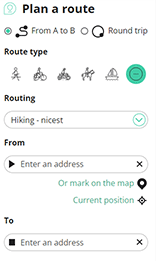
With RouteYou, it's easy to create your own customised maps. Simply plot your route, add waypoints or nodes, add places of interest and places to eat and drink, and then easily share it with your family and friends.
Route planner
<iframe src="https://plugin.routeyou.com/poiviewer/free/?language=en&params.poi.id=1601092&params.language=de" width="100%" height="600" frameborder="0" allowfullscreen></iframe>

More than 10,100,000 routes

More than 15,000,000 users

More than 4,500,000 points of interest

Kerkstraat 108
9050 Gentbrugge, Belgium
© 2006-2026 RouteYou - www.routeyou.com