The Lords of Herzele inhabited this moated castle. For centuries they ruled the seigneury of 'Hersele', one of the most important seigneuries of the 'Land Van Aelst'.
The castle was probably built at the beginning of the 7th century. At that time it was a primitive building, consisting of wood and wickerwork, with earthen dams and surrounded by water. It was a pretty good bulwark against the Normans: a 'harja sali', which means as much as 'a building of the lord'. The name 'Herzele' is derived from this 'harja sali'.
In the course of the 11th century, the building was built in stone. In 1056, the region was conquered by Baldwin V, Count of Flanders, which meant that the area was no longer part of the German Empire.
In 1096, Franco, then Lord of Herzele, went on a crusade to the Holy Land. Presumably he had the extra reinforcement work carried out, before leaving his family behind.
In 1381, Herzele became the battleground between the Count of Flanders and the people of Ghent. The castle of the then lord of the castle Seger, together with the adjacent church and the surrounding houses, was destroyed. John of Roubaix rebuilt the castle at the beginning of the 15th century.
In 1579 the castle was finally destroyed. Cannons of the Catholic Spaniards destroyed the castle of the Protestant Peter of Melun. Only one tower was spared. Nevertheless, the monks of St. Peter's Abbey in Ghent would hide their archives here between 1579 and 1585.
Since 6 July 1957 (Royal Decree), the castle ruins have been listed together with the surrounding meadows. In 1969 the Municipality of Herzele became the owner. Since 1972 she has had restoration work carried out. The northeast tower was resurrected. The floor plan, with the foundations of the walls, the square keep on the south side, and the corner towers were made visible. A moat encloses the site.
The corner tower can be climbed via the stair tower, which was built in Ledesteen. There are doorways in that tower. These used to provide access to the defensive walls.
In the courtyard was the source of life of the castle: the well. In many castles, a lime tree grew above the well to keep the water as cool as possible in the summer.
 Azure
Azure | | Public | Danish • Dutch • French • German • Italian • Spanish
Address: Herzele
Statistics
Select one of the most popular activities below or refine your search.
Discover the most beautiful and popular trails in the area, carefully bundled into appropriate selections.
Select one of the most popular categories below or be inspired by our selections.
Discover the most beautiful and popular attractions in the area, carefully bundled in appropriate selections.
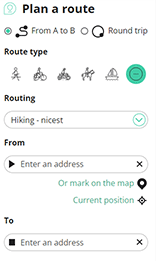
With RouteYou, it's easy to create your own customised maps. Simply plot your route, add waypoints or nodes, add places of interest and places to eat and drink, and then easily share it with your family and friends.
Route planner
<iframe src="https://plugin.routeyou.com/poiviewer/free/?language=en&params.poi.id=702653" width="100%" height="600" frameborder="0" allowfullscreen></iframe>

More than 11,800,000 routes

More than 15,000,000 users

More than 4,500,000 points of interest

Kerkstraat 108
9050 Gentbrugge, Belgium
© 2006-2026 RouteYou - www.routeyou.com