Loam is carried by the strong north wind from the dry North Sea plain, and deposited on the slopes and in the valleys. (landmark 1) We owe the fertile agricultural land in Gooik to these ice ages.
----
Quaternary era
About 1.8 million years ago, the ice ages began. It's so cold that huge bodies of water freeze into ice. The sea level is falling and the North Sea is largely dry. The wind moves large amounts of dust from the north to the south over the unvegetated plains for a long time.
The heavier sand is soon held back by the higher relief and consequently deposited in Northern Flanders. The lighter sandy loam and loam (loess), on the other hand, is carried further by the wind. These have been deposited further south, with the amount of grains deposited varying. These materials cover the 'tertiary' relief of iron sandstone and clay layers. Gooik has a loamy soil, which gives the area a fertile character.
 Azure
Azure | | Public | Danish • Dutch • French • German • Italian • Spanish

Select one of the most popular activities below or refine your search.
Discover the most beautiful and popular trails in the area, carefully bundled into appropriate selections.
Select one of the most popular categories below or be inspired by our selections.
Discover the most beautiful and popular attractions in the area, carefully bundled in appropriate selections.
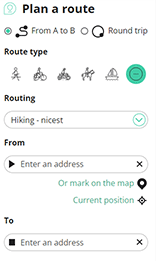
With RouteYou, it's easy to create your own customised maps. Simply plot your route, add waypoints or nodes, add places of interest and places to eat and drink, and then easily share it with your family and friends.
Route planner
<iframe src="https://plugin.routeyou.com/poiviewer/free/?language=en&params.poi.id=708813" width="100%" height="600" frameborder="0" allowfullscreen></iframe>

More than 11,800,000 routes

More than 15,000,000 users

More than 4,500,000 points of interest

Kerkstraat 108
9050 Gentbrugge, Belgium
© 2006-2026 RouteYou - www.routeyou.com