Source: Erik Malfait


We come across a sunken path with beech, sessile oak, and hornbeam. A sunken path is a road or path where the surface is lower than the surrounding land. Centuries of use of the same path, either on foot or with horse and cart, has led to a natural erosion process. Loose soil washed away with rainwater, causing the path to deepen year after year.
Sunken paths are typical small landscape elements in hilly regions with a clayey subsoil. Most sunken paths likely originated from the Middle Ages. Due to a growing population, farmers increasingly cleared more land and new paths were formed. Some sunken paths, however, are even older and date back to Roman times. Therefore, sunken paths carry a piece of history and are part of our cultural heritage.
In addition to their cultural-historical value, sunken paths also have significant ecological value. Due to their sunken position, a microclimate prevails in sunken paths, especially when the verges are forested. It is sheltered from the wind, shady, moist, cooler in the summer, and milder in the winter than 'outside'.
Source: Agentschap Natuur en Bos
 | | Public | Danish • Dutch • French • German • Italian • Spanish

Select one of the most popular activities below or refine your search.
Discover the most beautiful and popular trails in the area, carefully bundled into appropriate selections.
Source: Erik Malfait
Select one of the most popular categories below or be inspired by our selections.
Discover the most beautiful and popular attractions in the area, carefully bundled in appropriate selections.
Source: Erik Malfait
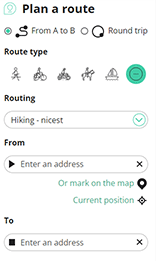
With RouteYou, it's easy to create your own customised maps. Simply plot your route, add waypoints or nodes, add places of interest and places to eat and drink, and then easily share it with your family and friends.
Route planner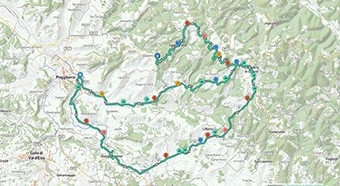
<iframe src="https://plugin.routeyou.com/poiviewer/free/?language=en&params.poi.id=921010" width="100%" height="600" frameborder="0" allowfullscreen></iframe>

More than 11,800,000 routes

More than 15,000,000 users

More than 4,500,000 points of interest

Kerkstraat 108
9050 Gentbrugge, Belgium
© 2006-2026 RouteYou - www.routeyou.com