Font: Staats-Spaanse Linies


Bruges originated in the 9th century from a fortified core around the count's castle, the "castrum," the current Burg. The expansion of the ramparts occurred in phases, with the first in the 12th century (a 4 km long palisade with towers and earthworks). A wider defensive belt was constructed in the 13th century (2 earthen walls and 2 moats interrupted by 7 bridge towers) when Bruges was a world-renowned trading center. Numerous mills were erected on the inner wall. In the 15th century, walls were built between various city gates. To withstand the artillery of enemy cannons, the fortifications underwent a thorough transformation in the 17th century, applying Italian fortification techniques: massive earthen walls, heavy masonry, a double ring of bastions, each protected by a wide fortified moat. At the location of the trading basin, at the start of the canal to Ostend, at the northern edge of the city, an additional fortification was built around 1665: Fort Lapin. This fortification consisted of a crownwork laid out on the east side of the turning basin. In 1782, Joseph II ordered the dismantling of the fortifications as their further maintenance was a burdensome expense for the city's coffers, since at that time there was no military danger from either France or the United Provinces. Thanks to regular maintenance and plantings, the fortifications became a favored walking area, for which a general (landscape) plan was designed in the 19th century to make it an "enjoyable public walk." The result of these efforts is that Bruges still has a green inner ring that envelops the city, although only a fraction of the original relief can still be found. The ramparts house a wealth of historical monuments such as the Poertoren and the Minnewater Bridge, warehouses, and windmills. The shooting grounds of the archery and crossbow guild at the Kruisvest were left untouched. Fort Lapin was incorporated into a new residential neighborhood.
Font: Staats-Spaanse Linies
 | | Pública | Alemany • Danès • Espanyol • Francès • Italià • Neerlandès
Direcció: Brugge
Estadístiques
Seleccioneu una de les activitats més populars a continuació o perfeccioneu la cerca.
Descobriu les rutes més boniques i conegudes de la zona, acuradament agrupades en seleccions adequades.
Font: Staats-Spaanse Linies
Seleccioneu una de les categories més populars a continuació o inspira't en les nostres seleccions.
Descobriu els llocs d'interès més bonics i coneguts de la zona, acuradament agrupats en seleccions adequades.
Font: Staats-Spaanse Linies
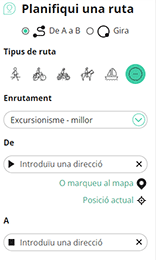
Amb RouteYou pots crear mapes personalitzats molt fàcilment. Defineix la teva ruta, afegeix waypoints o interseccions, planifica parades a punts d'interès o a establiments per menjar i beure i comparteix-ho tot amb els amics i la família.
Planificador de rutes
<iframe src="https://plugin.routeyou.com/poiviewer/free/?language=ca&params.poi.id=1414167&params.language=en" width="100%" height="600" frameborder="0" allowfullscreen></iframe>

Més de 11.800.000 rutes

Més de 15.000.000 usuaris

Més de 4.500.000 llocs d'interès

Kerkstraat 108
9050 Gentbrugge, Bèlgica
Contacteu amb el nostre equip d'atenció al client o visiteu el nostre centre d'ajuda.
© 2006-2026 RouteYou - www.routeyou.com