Datenquelle: Pascal Brackman
To the left of our bed, the Lombergbos covers the hill. To the right stands an attractive information board that explains the Nature Education Center Paddenbroek. We overlook the high-stem orchard. In the past, every farm in the Pajottenland had an orchard. High-stem fruit trees provided shade for grazing cattle and ensured healthy fruit. In spring, the blooming fruit trees are a sight for sore eyes and a paradise for various insects.
We continue to follow the old tramway bed. The railway embankment is man-made. Almost everything in the landscape has been created by human hands. However, there are also some natural landscape elements. Examples include springs, brooks, and ponds.
The spot to the right of the tramway bed was sometimes used as illegal dumping in the past. It is easily accessible and hidden from view. A real shame, considering that in Gooik, household waste is collected every two weeks and large waste twice a year.
The embankments are actually small nature reserves where many insects and small vertebrates find food and shelter. A variety of wild plants, trees, and shrubs grow there. The hazel is a shrub that blooms during winter. It is wind-pollinated, meaning pollination occurs via the wind. Witch rods are made from its wood.
It is a monoecious plant. Who doesn't enjoy delicious hazelnuts?
A bit further on, we come to a small alder grove on the left. The alder, also known as black alder, is a shrub that likes to grow in wet soils. Like the hazel, it is monoecious.
The fruits, initially green clusters, ripen in summer and then turn black. There are many small seeds between the scales of the cones. The siskins love them.
Next to the alder is the ash. This is a tree with compound leaves that are odd-pinnate. The buds are black. It blooms in April and May. The flowers give rise to winged fruits that hang in clusters. Ash wood is very tough and was often used to make ladders and spade handles.
Another natural resident of the railway embankment is the hawthorn. It is a bush-like tree, which is easily pruned. For that reason, it was often planted in hedge form as a pasture fence. Quite a few birds find a nesting place in it.
 | | Öffentlich | Deutsch • Dänisch • Französisch • Italienisch • Niederländisch • Spanisch
Adresse: Gooik
Statistiken
Wählen Sie eine der beliebtesten Aktivitäten unten aus oder verfeinern Sie Ihre Suche.
Entdecken Sie die schönsten und beliebtesten Routen in der Gegend, sorgfältig gebündelt in einer passenden Auswahl.
Datenquelle: Pascal Brackman
Wählen Sie eine der unten aufgeführten beliebtesten Kategorien oder lassen Sie sich von unserer Auswahl inspirieren.
Entdecken Sie die schönsten und beliebtesten Sehenswürdigkeiten der Gegend, sorgfältig gebündelt in einer entsprechenden Auswahl.
Datenquelle: Pascal Brackman
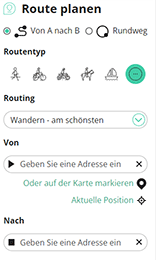
Mit RouteYou kannst du ganz einfach eigene Karten erstellen. Plane deine Route, füge Wegpunkte oder Knotenpunkte hinzu, plane Sehenswürdigkeiten und Einkehrmöglichkeiten ein und teile alles mit Familie und Freunden.
Routenplaner
<iframe src="https://plugin.routeyou.com/poiviewer/free/?language=de&params.poi.id=1813774&params.language=en" width="100%" height="600" frameborder="0" allowfullscreen></iframe>

Mehr als 10.100.000 Routen

Mehr als 15.000.000 Benutzer

Mehr als 4.500.000 Sehenswürdigkeiten

Kerkstraat 108
9050 Gentbrugge,Belgien
Kontaktieren Sie unser Kundendienstteam oder besuchen Sie unser Hilfezentrum.
© 2006-2026 RouteYou - www.routeyou.com