This antitank bunker A33 was constructed as part of the Ghent bridgehead. This defensive position was established between 1934 and 1938 south of Ghent to defend the national reduit*. The construction was part of the fortification policy that Belgium pursued after World War I.
The bridgehead was made up of two strongpoints – Betsberg and Muntekouter – and three support points – Semmerzake, Eke, and Astene. The strongpoints and support points were connected by a supporting defensive line (curtain), consisting of three defensive lines. This bunker was part of the front defensive line and was located just northeast of the strongpoint Betsberg.
The bunker consists of two combat rooms, which are not connected to each other. One room served as a gun chamber for mounting a 47mm antitank gun on a carriage (field mount). In the floor of the gun chamber are iron pins, which were used for the mount on which the gun stood.
The other room was designed as a machine gun chamber, with an L-shaped access hatch at the rear and an observation clock, which was accessible via six climbing irons.
A protruding wall (oreillon) at the southern corner served as additional protection for the firing openings. Around the firing openings and in the combat rooms, there are projectile impacts visible. Witnesses of the fierce fighting that lasted here for three days…
The bunker was camouflaged as a brick stable. To this end, the bunker was completely surrounded with brick, and the entrances and firing holes were fitted with metal and wooden shutters. In the firing holes themselves, so-called bricks painted in camouflage paint were also applied, as can still be beautifully seen today. On two other sides, windows were simulated.
A relatively flat roof with Boomse red mechanical roof tiles was laid on the bunker, on which a pigeon loft stood that hid the observation clock. Plantings on the southwestern side served as additional camouflage.
By order of the German occupier, metal parts were removed during World War II, and the bunker entrances and firing holes were bricked up. The bunker was only reopened in 2006.
* A fortification or defensive structure that could withstand an attack for a time.
Datenquelle: Toerisme Oosterzele
 | | Öffentlich | Deutsch • Dänisch • Französisch • Italienisch • Niederländisch • Spanisch
Adresse: Wulgenstraat, 9860 Oosterzele, Oost-Vlaanderen, Belgien
Statistiken
Wählen Sie eine der beliebtesten Aktivitäten unten aus oder verfeinern Sie Ihre Suche.
Entdecken Sie die schönsten und beliebtesten Routen in der Gegend, sorgfältig gebündelt in einer passenden Auswahl.
Datenquelle: Toerisme Oosterzele
Wählen Sie eine der unten aufgeführten beliebtesten Kategorien oder lassen Sie sich von unserer Auswahl inspirieren.
Entdecken Sie die schönsten und beliebtesten Sehenswürdigkeiten der Gegend, sorgfältig gebündelt in einer entsprechenden Auswahl.
Datenquelle: Toerisme Oosterzele
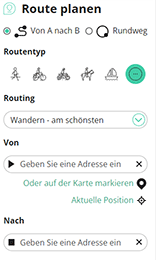
Mit RouteYou kannst du ganz einfach eigene Karten erstellen. Plane deine Route, füge Wegpunkte oder Knotenpunkte hinzu, plane Sehenswürdigkeiten und Einkehrmöglichkeiten ein und teile alles mit Familie und Freunden.
Routenplaner
<iframe src="https://plugin.routeyou.com/poiviewer/free/?language=de&params.poi.id=2103854&params.language=en" width="100%" height="600" frameborder="0" allowfullscreen></iframe>

Mehr als 11.800.000 Routen

Mehr als 15.000.000 Benutzer

Mehr als 4.500.000 Sehenswürdigkeiten

Kerkstraat 108
9050 Gentbrugge,Belgien
Kontaktieren Sie unser Kundendienstteam oder besuchen Sie unser Hilfezentrum.
© 2006-2026 RouteYou - www.routeyou.com