Datenquelle: Pauwels, Oswald, 01-01-1970, ©Vlaamse Gemeenschap
Urheberrechte: All rights reserved


Parish Church of St. John the Baptist. Very picturesquely situated country church on the left bank of the Lys with partially walled cemetery and surrounding plants. First mention of a church in 939, but probably even earlier as Afsnee was already mentioned among the goods of St. Peter's Abbey under King Lothair. However, the current church is the result of numerous renovations. Romanesque core from the end of the 12th century in the shape of a Latin cross with crossing tower. Conceived as a three-aisled church (foundations were present) but presumably only the central nave was executed. Square crossing tower in the 13th century or a little later with pointed arch-shaped reverberation holes. The north wall of the nave was rebuilt in brick at the end of the 15th century and has three Gothic pointed arch windows, a large pointed arch window in the east wall of the choir (traces visible in the attic). Around 1767-68, under the direction of L. De Villegas, master builder of St. Peter's Abbey, major repairs were carried out: the various gables were raised in brick and the roofs raised, the tower restored and the carpentry renewed. A plastered ceiling was placed in the nave and chancel to replace the wooden vault. In 1786 the shale roof was renewed. According to a date on a beam, the roof truss of the nave was probably repaired in 1806. In 1905-1906 thorough restorations took place under the direction of architect A. Van Assche: reconstructing (re)construction of the aisles and repair of the other parts of the church in Romanesque style, north wall of the nave rebuilt in rubble stone and equipped with round-arched windows, ditto for choir and gables, restoration of the interior. Repairs to the roof in 1954-58 and 1974 under the direction of architect A. Bressers. The present floor plan shows a basilica three-aisled nave of three bays, a crossing tower on a square plan, unprojecting transept arms and a choir of one bay with straight closing; To the left and right in the armpit respectively a small rectangular storeroom and sacristy. Externally built entirely of Tournai limestone in irregular pattern (opus incertum) under a gable roof (slates) with leaning pent roofs. Octagonal crossing tower projecting above the roof under slate needle spire. Transition between square base and octagonal articulation of the bell chamber by means of triangular ascenches (slate tiles) above it circumferential cordon moulding. Transept arms under separate gable roofs. West façade with high gable supported by two heavy chamfered buttresses, above the basket-arched door connected by a slate canopy. Round-arched window with wide chamfered reveals; stained glass. Small round-arched window in gable. Blank walls of side aisles, in north side with facing stone: "Restored and enlarged in the year 1906 - J. Matthieu, pastor"; in the south side at the bottom with bricked-in herringbone bond coming from the foundations. Round-arched windows in aisles and as fanlights; a large window in east wall of chancel. Pointed arch-shaped reverberation holes in the tower. Interior divided into three naves by heavy rectangular plastered pillars (bluestone plinths) with fine impost on the inside of the round-arched arches. Crossing with four pointed arches on heavy rectangular pillars. Slightly lower choir of one bay with three high round-arched niches in the north and east walls, broken in the middle by a round-arched window with stained glass (donated in 1907 by Count de Hemptinne in the east façade). Nave and choir covered by flat wooden ceiling; side aisles with sloping wooden ceiling, transept arms with basket-arched wooden barrel vault and crossing with plastered cross rib vault. Furniture: paintings: Baptism of Jesus in the Jordan by Th. Rombouts (18th century) Sculpture: Pietà in terracotta with remains of polychromy (17th century); Jesus on the cross, from the Calvary (originally outside the church), wood with traces of polychromy (16th-17th century) Altarpiece designed by Baron J. Bethune executed by L. Blanchaert, polychrome palm wood and oak, each statuette individually dated between 1860 and 1906, from the castle de Hemptinne of Maaltebrugge. Baptismal font of sandstone and bluestone, dated 1601 and donated by Van der Guchte (inscription).
Datenquelle: Bogaert, Chris (1983)
Urheberrechte: All rights reserved
 Azure
Azure | | Öffentlich | Deutsch • Dänisch • Französisch • Italienisch • Niederländisch • Spanisch
Adresse: Afsneedorp, Gent
Statistiken
Wählen Sie eine der beliebtesten Aktivitäten unten aus oder verfeinern Sie Ihre Suche.
Entdecken Sie die schönsten und beliebtesten Routen in der Gegend, sorgfältig gebündelt in einer passenden Auswahl.
Datenquelle: Pauwels, Oswald, 01-01-1970, ©Vlaamse Gemeenschap
Urheberrechte: All rights reserved
Wählen Sie eine der unten aufgeführten beliebtesten Kategorien oder lassen Sie sich von unserer Auswahl inspirieren.
Entdecken Sie die schönsten und beliebtesten Sehenswürdigkeiten der Gegend, sorgfältig gebündelt in einer entsprechenden Auswahl.
Datenquelle: Pauwels, Oswald, 01-01-1970, ©Vlaamse Gemeenschap
Urheberrechte: All rights reserved
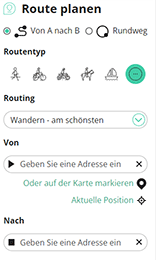
Mit RouteYou kannst du ganz einfach eigene Karten erstellen. Plane deine Route, füge Wegpunkte oder Knotenpunkte hinzu, plane Sehenswürdigkeiten und Einkehrmöglichkeiten ein und teile alles mit Familie und Freunden.
Routenplaner
<iframe src="https://plugin.routeyou.com/poiviewer/free/?language=de&params.poi.id=3196568&params.language=en" width="100%" height="600" frameborder="0" allowfullscreen></iframe>

Mehr als 11.800.000 Routen

Mehr als 15.000.000 Benutzer

Mehr als 4.500.000 Sehenswürdigkeiten

Kerkstraat 108
9050 Gentbrugge,Belgien
Kontaktieren Sie unser Kundendienstteam oder besuchen Sie unser Hilfezentrum.
© 2006-2026 RouteYou - www.routeyou.com