Bron: Willem Vandenameele


For centuries there has been a ban mill , the feudal right of which was sold to the city in 1267 by Countess Margareta of Constantinople. A banmolen, or force mill, was a mill where the neighboring farmers were obliged to grind their grain. Often these mills were owned by the local lord or other higher authority, such as an abbey, who had been given wind or water rights for the mill. The feudal right of mill coercion originated in Western Europe in the twelfth century .
This stone mill was built in 1867 on the rampart of an old wooden mill.
The mill is equipped with two stone couples and an oil mill in the basement. The mill stopped in 1963, after which the Schellemolen fell into disrepair. In 1971 the province of West Flanders bought the mill. It was restored and has been milling again since 1977.
Bron: Willem Vandenameele
 | | Publiek | Catalaans • Deens • Duits • Frans • Italiaans • Nederlands • Spaans

Selecteer hieronder één van de populairste activiteiten of verfijn je zoekopdracht.
Ontdek de mooiste en meest populaire routes in de buurt, zorgvuldig gebundeld in passende selecties.
Bron: Willem Vandenameele
Selecteer hieronder één van de populairste categorieën of laat je inspireren door onze selecties.
Ontdek de mooiste en meest populaire bezienswaardigheden in de buurt, zorgvuldig gebundeld in passende selecties.
Bron: Willem Vandenameele
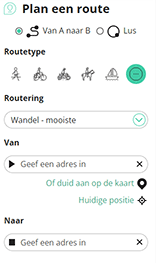
Met RouteYou kan je eenvoudig zelf aangepaste kaarten maken. Stippel je route uit, voeg waypoints of knooppunten toe, plan bezienswaardigheden en eet- en drinkgelegenheden in en deel alles met je familie en vrienden.
Routeplanner
<iframe src="https://plugin.routeyou.com/poiviewer/free/?language=nl&params.poi.id=8398607&params.language=en" width="100%" height="600" frameborder="0" allowfullscreen></iframe>

Meer dan 11.800.000 routes

Meer dan 15.000.000 gebruikers

Meer dan 4.500.000 trekpleisters

Kerkstraat 108
9050 Gentbrugge, België
© 2006-2026 RouteYou - www.routeyou.com