Datenquelle: Willem Vandenameele
It was at the request of King Philip II of Spain and his government in Brussels that a meat house was built on the banks of the Sambre between 1588 and 1590 . Hence the coat of arms of the Spanish king above the entrance gate of the hall.
The Halle al'Chair is an elongated building in brick and bluestone with a rectangular plan. The traditional Maasland architecture is characterized by the Renaissance of the end of the 16th century. He is today the only public citizen witness since the destruction of the city hall in 1826.
Between 1590 and 1806 the building served as a meat hall. On the basement floor, near the Sambre, the cattle were slaughtered; Meat was traded on the ground floor and the guild hall was located on the first floor.
After the butchers were given permission to slaughter at home, they left the building in 1806 and the Halle al'Chair became the property of the City of Namur . During the time of the United Kingdom of the Netherlands, the building was used as a Protestant church for the men of the Dutch garrison, which was stationed in Namur. Afterwards, the building housed a hospital and later a school .
Since 1855, the building has had a museum function and houses the collection of the archaeological association of Namur . In 1936, part of the collection was moved to the new Musée de Groesbeeck de Croix. From that moment on, the collection in the Halle al'Chair only includes the prehistoric, Gallo-Roman and Merovingian parts of the total collection. Due to the constant growth of the collection and the need to house the various archaeological collections in close proximity, the collection was moved from the Halle al'Chair to Les Bateliers Musée Archéologique et des Arts Décoratifs . As a result, the building lost its museum function, which it fulfilled for more than 150 years.
In April 2009, a tourist information center was opened in the Halle al'Chair. After the restoration in 2023, the Halle al'Chair again became the tourist information office.
Datenquelle: Willem Vandenameele - Wikipedia
 | | Öffentlich | Deutsch • Dänisch • Französisch • Italienisch • Katalanisch • Niederländisch • Spanisch

Wählen Sie eine der beliebtesten Aktivitäten unten aus oder verfeinern Sie Ihre Suche.
Entdecken Sie die schönsten und beliebtesten Routen in der Gegend, sorgfältig gebündelt in einer passenden Auswahl.
Datenquelle: Willem Vandenameele
Wählen Sie eine der unten aufgeführten beliebtesten Kategorien oder lassen Sie sich von unserer Auswahl inspirieren.
Entdecken Sie die schönsten und beliebtesten Sehenswürdigkeiten der Gegend, sorgfältig gebündelt in einer entsprechenden Auswahl.
Datenquelle: Willem Vandenameele
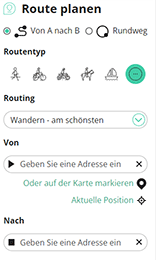
Mit RouteYou kannst du ganz einfach eigene Karten erstellen. Plane deine Route, füge Wegpunkte oder Knotenpunkte hinzu, plane Sehenswürdigkeiten und Einkehrmöglichkeiten ein und teile alles mit Familie und Freunden.
Routenplaner
<iframe src="https://plugin.routeyou.com/poiviewer/free/?language=de&params.poi.id=8666467&params.language=en" width="100%" height="600" frameborder="0" allowfullscreen></iframe>

Mehr als 10.100.000 Routen

Mehr als 15.000.000 Benutzer

Mehr als 4.500.000 Sehenswürdigkeiten

Kerkstraat 108
9050 Gentbrugge,Belgien
Kontaktieren Sie unser Kundendienstteam oder besuchen Sie unser Hilfezentrum.
© 2006-2026 RouteYou - www.routeyou.com