Source: Willem Vandenameele
The Roman baths from the 3rd century AD were completely restored between 1956 and 1958.
The thermal baths use the hypocaust system , the precursor to central heating. Hot air from a wood fire is channeled through underground brick ducts beneath the floors to heat the water in the baths.
The building has three rooms:
Frigidarium (cold bath) near the entrance
Tepidarium (lukewarm bath)
Caldarium (warm bath) above the hypocaust system
Roman baths were much more than just places to wash. They served as social gathering places , much like modern cafés or sports clubs. People came there to relax, conduct business, read books, and discuss. Many baths were public and accessible to both wealthy and poor citizens (sometimes free or for a small fee). Men and women usually had separate bathing times .
Romans did not use soap , but cleaned their bodies with oil (often perfumed), which they then scraped from their skin with a metal scraper ( strigil ) along with dirt and sweat.
Source: Willem Vandenameele - ChatGPT
 | | Public | Catalan • Danish • Dutch • French • German • Italian • Spanish

Select one of the most popular activities below or refine your search.
Discover the most beautiful and popular trails in the area, carefully bundled into appropriate selections.
Source: Willem Vandenameele
Select one of the most popular categories below or be inspired by our selections.
Discover the most beautiful and popular attractions in the area, carefully bundled in appropriate selections.
Source: Willem Vandenameele
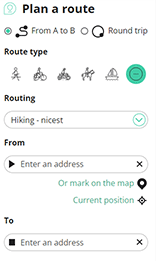
With RouteYou, it's easy to create your own customised maps. Simply plot your route, add waypoints or nodes, add places of interest and places to eat and drink, and then easily share it with your family and friends.
Route planner
<iframe src="https://plugin.routeyou.com/poiviewer/free/?language=en&params.poi.id=9195111" width="100%" height="600" frameborder="0" allowfullscreen></iframe>

More than 11,800,000 routes

More than 15,000,000 users

More than 4,500,000 points of interest

Kerkstraat 108
9050 Gentbrugge, Belgium
© 2006-2026 RouteYou - www.routeyou.com