Source: Willem Vandenameele
This church has its origins in a chapel built in the 16th century as the seat of the Augustinian nuns.
Since the first half of the 17th century , the church has housed the Confraternity of Our Lady of the Black Rosary , from which it takes its current name. The original building has been modified several times over time and the current physiognomy is academic and dates from the end of the 18th century, the work of Torcuato Benjumeda.
It has a three-naved Latin cross plan with the main nave divided into four bays separated by Doric columns. The main facade, characterized by four Ionic pilasters , divides it into three bays, the center of which is an attic. The marble facade is a Baroque work of Genoese origin from the beginning of the 18th century and is crowned by a triangular tympanum depicting Our Lady of the Rosary, Saint Peter and Saint Paul.
The main altarpiece contains a niche of Our Lady of the Rosary , built in the late 18th century; On either side are those of Sant Servando and Sant Germà, attributed to Francisco de Villegas. On the side walls are two paintings by Juan de Herrera depicting the Trinity and the handing over of the chasuble to Saint Ildefonso.
The altarpiece on the left is an 18th-century representation of Saint Joseph. The first altarpiece is the Crucificado de las Misericordies, from the 18th-century Genoese school, and on either side are San Francisco de Borja and San Luis Gonzaga. Below is the important statue of Our Lady of the Angels, attributed to Benito de Hita del Castillo and polychromed by Francisco Maria Mortola.
Source: Willem Vandenameele
 | | Public | Italien • allemand • catalan • espagnol • français • néerlandais

Sélectionnez l'une des activités les plus populaires ci-dessous ou affinez votre recherche
Découvrez les plus beaux et les plus populaires itinéraires du secteur, soigneusement regroupés dans des sélections appropriées.
Source: Willem Vandenameele
Sélectionnez l'une des catégories les plus populaires ci-dessous ou inspirez-vous de nos sélections
Découvrez les plus beaux et les plus populaires points d'intérêt du secteur, soigneusement regroupés dans des sélections appropriées.
Source: Willem Vandenameele
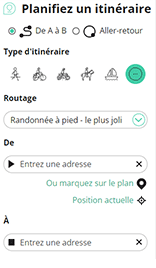
Avec RouteYou, vous pouvez facilement créer vos propres cartes personnalisées. Tracez votre itinéraire, ajoutez des points de passage ou des points-nœuds, planifiez des points d'intérêt et des lieux de restauration, et partagez le tout avec votre famille et vos amis.
Planificateur d'itinéraire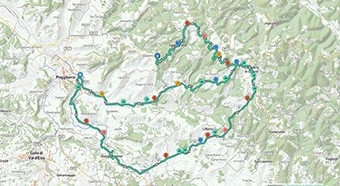
<iframe src="https://plugin.routeyou.com/poiviewer/free/?language=fr&params.poi.id=8425833&params.language=en" width="100%" height="600" frameborder="0" allowfullscreen></iframe>

Plus de 10 100 000 itinéraires

Plus de 15 000 000 d'utilisateurs

Plus de 4 500 000 points d'intérêts

Kerkstraat 108
9050 Gentbrugge, Belgique
Contactez notre équipe de support client ou visitez notre centre d'aide.
© 2006-2026 RouteYou - www.routeyou.com