Datenquelle: Willem Vandenameele


In the Plaza de la Romanilla, near the cathedral, is the "Monumento al aguador", a work that Aurelio Teno made in 1999 .
With figurative expressionism, the artist pays homage to the water-carrier profession in Granada , a profession that lived on from the 11th century to the mid-20th century.
Executed in full-size bronze , the statue depicts the typical rough and poor figure, with his clothes in tatters. A hat covers his head, reminiscent of the bandits of the 19th century. The water bearer carries a glass in his left hand , with which he offers water on the street, and is accompanied by a donkey laden with demijohns on either side.
The whole is placed on a paved platform, which covers what was in the 1980s a fountain , a meeting place for hip-hoppers, who called it the "Hexagon ".
The water carrier, or aguaor, has been a hugely important profession throughout history in Andalusia and much of Spain. Its activity consisted of the itinerant sale of water in the city, both to passers-by and to houses that had no water. In these houses it was common to have one or more vessels in which water was stored.
The water carriers, with the help of donkeys, carried the water in large earthenware, metal or glass jars, which they placed in the water jugs. To keep the water cool, they made the pitchers from wet esparto grass.
Aguador trade in Granada began with the arrival of the Arabs.
The first water carriers settled in what is now the district of La Churra , formerly known as the Mauror , meaning the district of the water carriers . The muhtasib or almotacén watched over the quality of the water they sold.
The muhtasib was the judge and in charge of supervising the activities of the water carriers and making sure that they drew the water from the wells in the part of the river where it was not muddy or dirty . They ordered the water carriers to collect the water from the river for domestic use above the polluted areas, for all the garbage, both personal and from trade, ended up in the river.
The water carriers of Granada also drew water from famous springs such as the Avellano, or the Culebra on the banks of the river Genil.
Datenquelle: Willem Vandenameele
 | | Öffentlich | Deutsch • Dänisch • Französisch • Italienisch • Katalanisch • Niederländisch • Spanisch
Adresse: Lodistraat 64, 8020 Hertsberge, Belgien
Statistiken
Wählen Sie eine der beliebtesten Aktivitäten unten aus oder verfeinern Sie Ihre Suche.
Entdecken Sie die schönsten und beliebtesten Routen in der Gegend, sorgfältig gebündelt in einer passenden Auswahl.
Datenquelle: Willem Vandenameele
Wählen Sie eine der unten aufgeführten beliebtesten Kategorien oder lassen Sie sich von unserer Auswahl inspirieren.
Entdecken Sie die schönsten und beliebtesten Sehenswürdigkeiten der Gegend, sorgfältig gebündelt in einer entsprechenden Auswahl.
Datenquelle: Willem Vandenameele
Mit RouteYou kannst du ganz einfach eigene Karten erstellen. Plane deine Route, füge Wegpunkte oder Knotenpunkte hinzu, plane Sehenswürdigkeiten und Einkehrmöglichkeiten ein und teile alles mit Familie und Freunden.
Routenplaner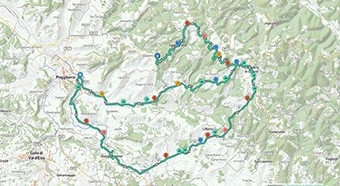
<iframe src="https://plugin.routeyou.com/poiviewer/free/?language=de&params.poi.id=8433306&params.language=en" width="100%" height="600" frameborder="0" allowfullscreen></iframe>

Mehr als 11.800.000 Routen

Mehr als 15.000.000 Benutzer

Mehr als 4.500.000 Sehenswürdigkeiten

Kerkstraat 108
9050 Gentbrugge,Belgien
© 2006-2026 RouteYou - www.routeyou.com