Datenquelle: Willem Vandenameele


At the end of the 15th century, Pedro Enríquez -Adelantado Mayor de Andalucía- and his wife Catalina de Ribera built their palace next to what was probably the layout of the Decumano Maximo of Roman Seville and on the same height as the current one.
To obtain a certain width for the palace, which would make it more prominent, they bought several houses which they demolished , creating a small square that became known as the Plaza del Adelantado . Here were houses with arcades and a fountain. At the end of the 16th century it became known as the Plaza del Marqués de Tarifa , a title given to the son of the previous owners, Fadrique Enríquez de Ribera, who extensively renovated the old palace, especially after returning from his journey to the Holy Land between 1518 and 1520.
According to tradition, he then decided to establish a Station of the Cross with the first station at the palace and the last at the sanctuary of Cruz del Campo, with a distance comparable to that between Pontius Pilate's palace and Golgotha in Jerusalem . Because of this, the palace soon became known as Casa de Pilatos (its real name is Palacio de San Andrés ), a name that would also make the square known as the Plaza del Duque de Alcalá.
The palace is an interesting building that shows the first manifestations of the Italian Renaissance in Seville - especially its facade.
Today the square no longer has a fountain, because the fountain it had at the end of the 19th century has disappeared. In 1977, the Plaza de Pilatos was redesigned and the current paving was installed.
The square has two different spaces or areas separated by a stretch of road. The landscape in this area is dominated by the monument of Zurbarán on a stone plinth.
The pungent scent of the dama de noche (Cestrum nocturnum) on the corners helps to make this place a relaxing retreat during warm Sevillian nights, disturbed only by the traffic on Calle San Esteban. This flowerbed formula was common in many 19th-century squares , which were organized around a central monument. Today it can only be found here and on Museumplein (both of which have been renovated). The vegetation is completed by three palm trees (Phoenix canariensis) in raised circular beds, above which gracefully climbs white jasmine (Jasminum officinale). The triangular arrangement around the monument, instead of the usual square one, is remarkable.
Datenquelle: Willem Vandenameele
 | | Öffentlich | Deutsch • Dänisch • Französisch • Italienisch • Katalanisch • Niederländisch • Spanisch

Wählen Sie eine der beliebtesten Aktivitäten unten aus oder verfeinern Sie Ihre Suche.
Entdecken Sie die schönsten und beliebtesten Routen in der Gegend, sorgfältig gebündelt in einer passenden Auswahl.
Datenquelle: Willem Vandenameele
Wählen Sie eine der unten aufgeführten beliebtesten Kategorien oder lassen Sie sich von unserer Auswahl inspirieren.
Entdecken Sie die schönsten und beliebtesten Sehenswürdigkeiten der Gegend, sorgfältig gebündelt in einer entsprechenden Auswahl.
Datenquelle: Willem Vandenameele
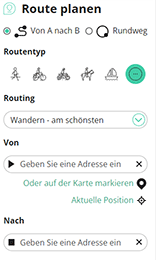
Mit RouteYou kannst du ganz einfach eigene Karten erstellen. Plane deine Route, füge Wegpunkte oder Knotenpunkte hinzu, plane Sehenswürdigkeiten und Einkehrmöglichkeiten ein und teile alles mit Familie und Freunden.
Routenplaner
<iframe src="https://plugin.routeyou.com/poiviewer/free/?language=de&params.poi.id=8742324&params.language=en" width="100%" height="600" frameborder="0" allowfullscreen></iframe>

Mehr als 10.100.000 Routen

Mehr als 15.000.000 Benutzer

Mehr als 4.500.000 Sehenswürdigkeiten

Kerkstraat 108
9050 Gentbrugge,Belgien
Kontaktieren Sie unser Kundendienstteam oder besuchen Sie unser Hilfezentrum.
© 2006-2026 RouteYou - www.routeyou.com