Source: Ludovic Lepeltier-Kutasi
Copyright: Creative Commons CC BY-SA 4.0


The Imperial Free City of Trieste and its Suburbs was a Habsburg possession from the 14th century to 1918, called in German as Reichsunmittelbare Stadt Triest und ihr Gebiet and in Italian as Città Imperiale di Trieste e Dintorni. In 1719 it was declared a free port by Charles VI, Holy Roman Emperor; the construction of the Austrian Southern Railway turned it into a bustling seaport, through which much of the exports and imports of the Austrian Lands were channelled. Trieste was part of the Holy Roman Empire and, later, of the German Confederation and the Austrian Littoral. The city administration and economy were dominated by the city's Italian population element; Italian was the language of administration and jurisdiction. In the later 19th and early 20th century, the city attracted the immigration of workers from the city's hinterlands, many of whom were speakers of Slovene.
After the fall of the Western Roman Empire in 476, Trieste was a Byzantine military outpost. In 567 AD the city was destroyed by the Lombards, in the course of their invasion of northern Italy. In 788 it became part of the Frankish kingdom, under the authority of their count-bishop. From 1081 the city came loosely under the Patriarchate of Aquileia, developing into a free commune by the end of the 12th century.
Source: Wikipedia.org
Copyright: Creative Commons 3.0
Address: Trieste, Italy
Statistics
Select one of the most popular activities below or refine your search.
Discover the most beautiful and popular trails in the area, carefully bundled into appropriate selections.
Source: Ludovic Lepeltier-Kutasi
Copyright: Creative Commons CC BY-SA 4.0
Select one of the most popular categories below or be inspired by our selections.
Discover the most beautiful and popular attractions in the area, carefully bundled in appropriate selections.
Source: Ludovic Lepeltier-Kutasi
Copyright: Creative Commons CC BY-SA 4.0
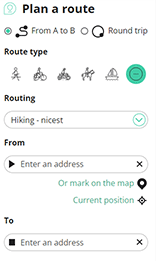
With RouteYou, it's easy to create your own customised maps. Simply plot your route, add waypoints or nodes, add places of interest and places to eat and drink, and then easily share it with your family and friends.
Route planner
<iframe src="https://plugin.routeyou.com/poiviewer/free/?language=en&params.poi.id=1674164" width="100%" height="600" frameborder="0" allowfullscreen></iframe>

More than 11,800,000 routes

More than 15,000,000 users

More than 4,500,000 points of interest

Kerkstraat 108
9050 Gentbrugge, Belgium
© 2006-2026 RouteYou - www.routeyou.com



 | | Public |