The Porta del Carmine is centrally located within the city walls and is the only one with a rampart and an adjacent square within the walls themselves.
In the absence of specific historical information, its origins, as with the other two city gates, seem to date back to the period between Norman times, when the city was fortified, and the 14th century, when the city flourished again. The megalithic structure of the base and side walls of the gate and the simple, linear architecture of a military nature nevertheless point to an ancient origin, although the presence of the round arch, in contrast to the pointed arches of the other two city gates, makes the gate closer places in the 14th century.
It is the middle one between the three existing gates and looks distinctly medieval, despite the various renovations it has undergone over time. The gate, bordered on the west by a pine forest, faces the Piazza del Carmine , from which five streets in the city originate and onto which the Church of Carmine and the Military Palace face.
The presence above the arch of a large spherical niche containing a headless calcarenite statue of St. Albert from the 17th century gives the gate an important significance and makes it one of the most important entrances to the city.
The city gates should be considered an integral part of the impregnable city walls of Erice which were fortified in Norman times and in which new and larger gates were created. Specifically, the visible gates of the village of Erice are: Porta Trapani, which opens towards the provincial capital in which two robust bastions flank the pointed arch shape. Porta Spada refers to the massacre caused by the Angevins during the 'Vespro' uprising in the area. Finally, Porta Carmine, located opposite the church of the same name, is characterized by the niche with the limestone statue of St. Alberto (now headless) that dominates it. The fourth gate, that of Castellammare, has had the remains of its mighty base discovered following recent excavation campaigns in the northern part of the city center, near the Spanish Quarter. This gate, which owes its name to the fact that it was located in the direction of Castellamare del Golfo, must have been the terminus of an ancient and important communication route, the so-called “Trazzera di Bonagia”.
Fuente: Willem Vandenameele
 | | Pública | Alemán • Catalán • Danés • Español • Francés • Italiano • Neerlandés

Selecciona una de las actividades más populares a continuación o afina tu búsqueda
Descubre las rutas más bonitas y populares de la zona, cuidadosamente agrupadas y seleccionadas.
Fuente: enjoysicilia
Selecciona una de las categorías más populares a continuación o inspírate en nuestras selecciones
Descubre los lugares de interés más bonitos y populares de la zona, cuidadosamente agrupados y selecciondos.
Fuente: enjoysicilia
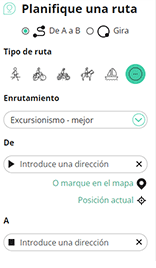
Con RouteYou, es fácil crear tus propios mapas personalizados. Simplemente traza tu ruta, agrega puntos de ruta o nodos, agrega lugares de interés, lugares para comer y beber, y luego compártelo fácilmente con tu familia y amigos.
Planificador de rutas
<iframe src="https://plugin.routeyou.com/poiviewer/free/?language=es&params.poi.id=8653922&params.language=en" width="100%" height="600" frameborder="0" allowfullscreen></iframe>

Más de 11.800.000 rutas

Más de 15.000.000 usuarios

Más de 4.500.000 lugares de interés

Kerkstraat 108
9050 Gentbrugge, Bélgica
© 2006-2026 RouteYou - www.routeyou.com