Philadelphia, colloquially Philly, is the largest city in the U.S. state of Pennsylvania and the sixth-most populous U.S. city, with a 2019 estimated population of 1,584,064. Since 1854, the city has had the same geographic boundaries as Philadelphia County, the most-populous county in Pennsylvania and the urban core of the eighth-largest U.S. metropolitan statistical area, with over 6 million residents as of 2017. Philadelphia is also the economic and cultural center of the greater Delaware Valley along the lower Delaware and Schuylkill rivers within the Northeast megalopolis. The Delaware Valley's population of 7.2 million makes it the eighth-largest combined statistical area in the United States.
Philadelphia is one of the oldest municipalities in the United States. William Penn, an English Quaker, founded the city in 1682 to serve as capital of the Pennsylvania Colony. Philadelphia played an instrumental role in the American Revolution as a meeting place for the Founding Fathers of the United States, who signed the Declaration of Independence in 1776 at the Second Continental Congress, and the Constitution at the Philadelphia Convention of 1787. Several other key events occurred in Philadelphia during the Revolutionary War including the First Continental Congress, the preservation of the Liberty Bell, the Battle of Germantown, and the Siege of Fort Mifflin. Philadelphia remained the nation's largest city until being overtaken by New York City in 1790; the city was also one of the nation's capitals during the revolution, serving as temporary U.S. capital while Washington, D.C. was under construction. In the 19th and 20th centuries, Philadelphia became a major industrial center and a railroad hub. The city grew due to an influx of European immigrants, most of whom initially came from Ireland and Germany—the two largest reported ancestry groups in the city as of 2015. Later immigrant groups in the 20th century came from Italy and other Southern European and Eastern European countries. In the early 20th century, Philadelphia became a prime destination for African Americans during the Great Migration after the Civil War. Puerto Ricans began moving to the city in large numbers in the period between World War I and II, and in even greater numbers in the post-war period. The city's population doubled from one million to two million people between 1890 and 1950.
Source: Wikipedia.org
Copyright: Creative Commons 3.0
Address: Philadelphia, United States
Statistics
Select one of the most popular activities below or refine your search.
Discover the most beautiful and popular trails in the area, carefully bundled into appropriate selections.
Source: Flickr
Copyright: Creative Commons CC BY-SA 2.0
Select one of the most popular categories below or be inspired by our selections.
Discover the most beautiful and popular attractions in the area, carefully bundled in appropriate selections.
Source: Flickr
Copyright: Creative Commons CC BY-SA 2.0
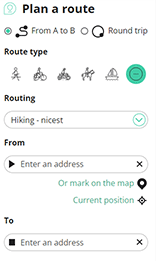
With RouteYou, it's easy to create your own customised maps. Simply plot your route, add waypoints or nodes, add places of interest and places to eat and drink, and then easily share it with your family and friends.
Route planner
<iframe src="https://plugin.routeyou.com/poiviewer/free/?language=en&params.poi.id=1474328" width="100%" height="600" frameborder="0" allowfullscreen></iframe>

More than 11,800,000 routes

More than 15,000,000 users

More than 4,500,000 points of interest

Kerkstraat 108
9050 Gentbrugge, Belgium
© 2006-2026 RouteYou - www.routeyou.com



 | | Public |