Su historia empezó en 1919, cuando el escultor Gustav Vigeland hizo una oferta al Municipio de Oslo para donar sus obras en el futuro. La trayectoria artística de Vigeland no consistió solo en esculturas, sino también en xilografías, dibujos, croquis y fotografías, así como cartas, otras escrituras y una biblioteca personal. A cambio, Vigeland quiso un estudio artístico. Dicho estudio podría ser reconstruido como museo después de su muerte. Incluso la habitación de Vigeland en el tercer piso se conservó como parte del museo.[1]
El edificio destinado a ser museo comenzó a construirse en 1921, tan rápido como se firmó el contrato entre Vigeland y la ciudad de Oslo.[2] Los arquitectos fueron Lorentz Harboe Ree y Carl Buch, y fue construido en estilo neoclásico. En 1923, Vigeland se mudó, un año antes de que la parte media y el ala norte estuvieran completadas. El ala sur fue terminada en 1930. El estudio fue utilizado tanto por Vigeland como por otros artistas.
Source: Wikipedia.org
Copyright: Creative Commons 3.0

Select one of the most popular activities below or refine your search.
Discover the most beautiful and popular trails in the area, carefully bundled into appropriate selections.
Source: Hans Olav Lien
Copyright: Creative Commons CC BY-SA 4.0
Select one of the most popular categories below or be inspired by our selections.
Discover the most beautiful and popular attractions in the area, carefully bundled in appropriate selections.
Source: Hans Olav Lien
Copyright: Creative Commons CC BY-SA 4.0
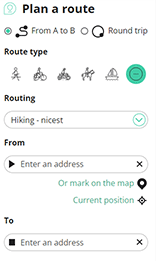
With RouteYou, it's easy to create your own customised maps. Simply plot your route, add waypoints or nodes, add places of interest and places to eat and drink, and then easily share it with your family and friends.
Route planner
<iframe src="https://plugin.routeyou.com/poiviewer/free/?language=en&params.poi.id=5809591&params.language=es" width="100%" height="600" frameborder="0" allowfullscreen></iframe>

More than 11,800,000 routes

More than 15,000,000 users

More than 4,500,000 points of interest

Kerkstraat 108
9050 Gentbrugge, Belgium
© 2006-2026 RouteYou - www.routeyou.com



 | | Public |