Risorsa: Pascal Brackman


La Alpbachtal è ciò che i geologi chiamano un anticlinale aperto. Si tratta di strati che sono piegati a forma di una A (vedi figura). Il nucleo (o strato inferiore) di quell'anticlinale è composto da ardesia. Ma la maggior parte della cima di quella 'A' nella valle di Alpbach è stata erosa (=aperta). Questo è dovuto al fatto che l'ardesia si degrada molto più rapidamente rispetto, ad esempio, allo strato di calcare leggermente più giovane. L'ardesia è anche a tenuta d'acqua e quindi l'acqua vi penetra poco e scorre principalmente via. Pertanto, si erode anche più rapidamente rispetto al calcare che si trova principalmente sulle vette a nord (Gratlspitze e Hochstrickl).
L'ardesia risale all'Ordoviciano. Il calcare risale al Devoniano.
 | | Pubblica | Danese • Francese • Inglese • Olandese • Spagnolo • Tedesco

Seleziona una delle attività più popolari qui sotto oppure affina la ricerca.
Scopri gli itinerari più belli e popolari della zona, accuratamente raggruppati in apposite selezioni.
Risorsa: Pascal Brackman
Seleziona una delle categorie più popolari qui sotto o lasciati ispirare dalla nostra selezione.
Scopri i luoghi di interesse più belli e popolari della zona, accuratamente raggruppati in apposite selezioni.
Risorsa: Pascal Brackman
Con RouteYou puoi creare facilmente mappe personalizzate. Traccia il tuo itinerario, aggiungi waypoint o nodi, luoghi di interesse e di ristoro, e condividi le mappe con la tua famiglia e i tuoi amici.
Pianificatore di itinerari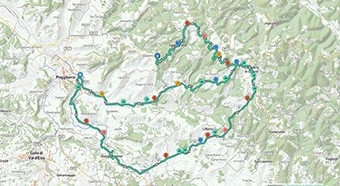
<iframe src="https://plugin.routeyou.com/poiviewer/free/?language=it&params.poi.id=8770856" width="100%" height="600" frameborder="0" allowfullscreen></iframe>

Più di 11.800.000 itinerari

Più di 15.000.000 utenti

Più di 4.500.000 luoghi d'interesse

Kerkstraat 108
9050 Gentbrugge, Belgio
© 2006-2026 RouteYou - www.routeyou.com