Bron: Willem Vandenameele
La Chiesa di San Giuseppe, costruita nel 1879 in stile neoromanico bizantino , è un capolavoro di Henri Beyaert. L'edificio è costruito con macerie locali di arenaria rossastra e gialla, con un bordo in pietra blu. L'edificio è noto per l' effetto creato dall'alternanza delle pietre.
Il portale ha un timpano con cronogramma e una colonna con gli attributi dei quattro evangelisti: l'aquila (Giovanni), il leone (Marco), il toro (Luca) e l'uomo (Matteo).
L'interno è costruito interamente in arenaria gialla con alternanza di mattoni rossi e pietra blu , con travi e pannelli in legno a vista. Beyaert ha lavorato con Paul Hankar, uno specialista del ferro battuto. Hankar ha realizzato tutti gli elementi decorativi in ferro, compresi i binari per la comunione, il bracciolo del pulpito e i bracci leggeri su ciascuna colonna. Il pulpito è stato scolpito da un unico blocco di pietra dall'artista locale François-Joseph Balthazart.
 | | Publiek | Catalaans • Deens • Duits • Engels • Frans • Nederlands • Spaans

Selecteer hieronder één van de populairste activiteiten of verfijn je zoekopdracht.
Ontdek de mooiste en meest populaire routes in de buurt, zorgvuldig gebundeld in passende selecties.
Bron: Willem Vandenameele
Selecteer hieronder één van de populairste categorieën of laat je inspireren door onze selecties.
Ontdek de mooiste en meest populaire bezienswaardigheden in de buurt, zorgvuldig gebundeld in passende selecties.
Bron: Willem Vandenameele
Met RouteYou kan je eenvoudig zelf aangepaste kaarten maken. Stippel je route uit, voeg waypoints of knooppunten toe, plan bezienswaardigheden en eet- en drinkgelegenheden in en deel alles met je familie en vrienden.
Routeplanner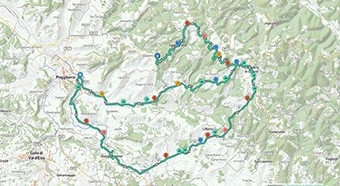
<iframe src="https://plugin.routeyou.com/poiviewer/free/?language=nl&params.poi.id=8656150&params.language=it" width="100%" height="600" frameborder="0" allowfullscreen></iframe>

Meer dan 11.800.000 routes

Meer dan 15.000.000 gebruikers

Meer dan 4.500.000 trekpleisters

Kerkstraat 108
9050 Gentbrugge, België
© 2006-2026 RouteYou - www.routeyou.com