Source: Pascal Brackman


Dettaglio dei pilastri. La breccia di conchiglie era un materiale da costruzione popolare. Facile da scolpire, ma molto solido, come puoi ancora vedere. Queste rocce risalgono al Pliocene. In epoca pliocenica, il graben del fiume Apheios e le Pianure di Elisa affondarono inizialmente più velocemente di quanto potessero essere riempiti di detriti provenienti dalle montagne nel centro del Peloponneso. Quest'area era sott'acqua, e qui furono depositati molti sedimenti marini e salmastri. Comprendendo le rocce calcari di conchiglia utilizzate come pietre da costruzione a Olimpia, come puoi vedere qui. Puoi ancora riconoscere le conchiglie nella roccia.
 | | Public | Danish • Dutch • English • French • German • Spanish

Select one of the most popular activities below or refine your search.
Discover the most beautiful and popular trails in the area, carefully bundled into appropriate selections.
Source: Pascal Brackman
Select one of the most popular categories below or be inspired by our selections.
Discover the most beautiful and popular attractions in the area, carefully bundled in appropriate selections.
Source: Pascal Brackman
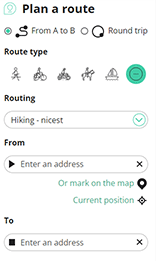
With RouteYou, it's easy to create your own customised maps. Simply plot your route, add waypoints or nodes, add places of interest and places to eat and drink, and then easily share it with your family and friends.
Route planner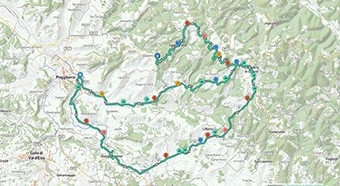
<iframe src="https://plugin.routeyou.com/poiviewer/free/?language=en&params.poi.id=7226649&params.language=it" width="100%" height="600" frameborder="0" allowfullscreen></iframe>

More than 11,800,000 routes

More than 15,000,000 users

More than 4,500,000 points of interest

Kerkstraat 108
9050 Gentbrugge, Belgium
© 2006-2026 RouteYou - www.routeyou.com