La costruzione fu commissionata da papa Urbano VIII nel 1626 fino 1634, che ne affida il progetto all'ingegnere Giulio Buratti di Senigallia, con lo scopo di difendere i confini dello Stato Pontificio.
I lavori hanno inizio nell'agosto del 1628; nel 1630 inizia l'abbattimento delle mura di cinta di Castel Franco, oramai inadatte alle esigenze difensive dell'epoca, per recuperarne il materiale di costruzione a favore del forte. Nel 1634 la costruzione è quasi conclusa: il forte si presenta a forma di stella, con mura interne circondate da un largo fossato e quattro baluardi muniti di torretta. La larghezza massima esterna è di 900 metri. L'accesso è consentito da una grande porta con tre ponti levatoi.
Source: Wikipedia.org
Copyright: Creative Commons 3.0

Select one of the most popular activities below or refine your search.
Discover the most beautiful and popular trails in the area, carefully bundled into appropriate selections.
Source: Carlo Alberto Bertelli
Copyright: Creative Commons CC BY-SA 3.0
Select one of the most popular categories below or be inspired by our selections.
Discover the most beautiful and popular attractions in the area, carefully bundled in appropriate selections.
Source: Carlo Alberto Bertelli
Copyright: Creative Commons CC BY-SA 3.0
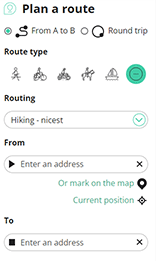
With RouteYou, it's easy to create your own customised maps. Simply plot your route, add waypoints or nodes, add places of interest and places to eat and drink, and then easily share it with your family and friends.
Route planner
<iframe src="https://plugin.routeyou.com/poiviewer/free/?language=en&params.poi.id=8360511&params.language=it" width="100%" height="600" frameborder="0" allowfullscreen></iframe>

More than 11,800,000 routes

More than 15,000,000 users

More than 4,500,000 points of interest

Kerkstraat 108
9050 Gentbrugge, Belgium
© 2006-2026 RouteYou - www.routeyou.com



 | | Public |