Source: Willem Vandenameele
El material de construcción de los edificios de Selinunte procede de la Cueva de Cusa. Este es el punto más cercano en Selinunte donde el lecho de calcarenita es lo suficientemente compacto y masivo como para liberar características tan sorprendentemente grandes como las del Templo G.
Para cortar un bloque o parte de una columna, se cortó un canal de 45 a 65 cm a su alrededor. Para soltar el bloque del fondo se utilizaban cuñas que se expandían con agua .
Desde allí los elementos de construcción debían ser transportados al lugar. Un método común era utilizar grandes rodillos de madera sobre los que se hacían rodar las piedras. Pero también se utilizaban carros especialmente diseñados para transportar piedras por las carreteras. Estos carros a menudo tenían grandes ruedas de madera y eran arrastrados por personas, animales o, a veces, incluso por el viento.
Source: Willem Vandenameele - ChatGPT
 | | Public | Catalan • Dutch • English • French • German • Italian

Select one of the most popular activities below or refine your search.
Discover the most beautiful and popular trails in the area, carefully bundled into appropriate selections.
Source: Willem Vandenameele
Select one of the most popular categories below or be inspired by our selections.
Discover the most beautiful and popular attractions in the area, carefully bundled in appropriate selections.
Source: Willem Vandenameele
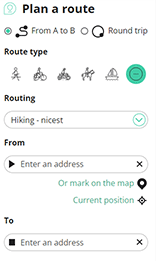
With RouteYou, it's easy to create your own customised maps. Simply plot your route, add waypoints or nodes, add places of interest and places to eat and drink, and then easily share it with your family and friends.
Route planner
<iframe src="https://plugin.routeyou.com/poiviewer/free/?language=en&params.poi.id=8654803&params.language=es" width="100%" height="600" frameborder="0" allowfullscreen></iframe>

More than 10,100,000 routes

More than 15,000,000 users

More than 4,500,000 points of interest

Kerkstraat 108
9050 Gentbrugge, Belgium
© 2006-2025 RouteYou - www.routeyou.com