Font: Ruben Grassi


Here, in the National Museum of Scotland, you can see a very strange object: a coffin collar or a collar for the dead. The coffin collar was an iron collar often fixed to a piece of wood. It was fixed around the neck of a corpse and then bolted to the bottom of a coffin. Most common reports of these collars being used came from Scotland around the 1820s. These collars were made to thwart grave robbers. The grave robbers were students of human anatomy. Legally, only the bodies of executed criminals could be used to study anatomy. But the demand was bigger than the supply.
Font: Eric Weiner, 2016, Geography of Genius, 146
 | | Pública | Alemany • Francès • Neerlandès
Direcció: City of Edinburgh, Regne Unit
Estadístiques
Seleccioneu una de les activitats més populars a continuació o perfeccioneu la cerca.
Descobriu les rutes més boniques i conegudes de la zona, acuradament agrupades en seleccions adequades.
Font: Ruben Grassi
Seleccioneu una de les categories més populars a continuació o inspira't en les nostres seleccions.
Descobriu els llocs d'interès més bonics i coneguts de la zona, acuradament agrupats en seleccions adequades.
Font: Ruben Grassi
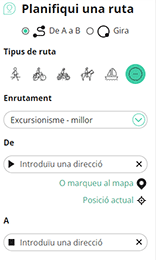
Amb RouteYou pots crear mapes personalitzats molt fàcilment. Defineix la teva ruta, afegeix waypoints o interseccions, planifica parades a punts d'interès o a establiments per menjar i beure i comparteix-ho tot amb els amics i la família.
Planificador de rutes
<iframe src="https://plugin.routeyou.com/poiviewer/free/?language=ca&params.poi.id=2667658&params.language=en" width="100%" height="600" frameborder="0" allowfullscreen></iframe>

Més de 10.100.000 rutes

Més de 15.000.000 usuaris

Més de 4.500.000 llocs d'interès

Kerkstraat 108
9050 Gentbrugge, Bèlgica
Contacteu amb el nostre equip d'atenció al client o visiteu el nostre centre d'ajuda.
© 2006-2026 RouteYou - www.routeyou.com