Datenquelle: Perplexity


For the ten major rare earth elements (REEs), China dominates, often supplemented by the US, Australia and Myanmar; heavy REEs (Dy, Tb) rely heavily on Myanmar as a mining source, but are usually processed in China.
To find rich rare earth ores, you need a few very specific geological puzzle pieces that have to fall into place simultaneously. In the source sphere, everything begins with magmas (mantle or crust) that naturally contain many light and/or heavy REEs, especially in alkaline rocks, peralkaline granites, and carbonatites. In such magmas, REE-bearing minerals such as monazite, bastnäsite, xenotime, apatite, eudialyte, and fergusonite can concentrate, thus creating a REE-rich parent rock.
Additionally, you need a suitable geodynamic setting. Intracontinental rift zones, mantle plumes, or late- to post-orogenic situations are typical, as alkaline magmas can rise there, fractionate, and remain trapped in the crust instead of rapidly flowing out. This provides time and space for differentiation, crystallization, and hydrothermal processes that can further enrich REEs in certain minerals and zones.
Weathering and hydrology then play a key role, especially in clay-hosted REE ores. In warm, humid climates, deep chemical weathering (lateritization) can slowly decompose granites and alkaline rocks. This releases REEs from the primary minerals and precipitates or adsorbs to clay minerals, forming so-called ion-adsorption clays. It is crucial that the landscape remains stable long enough afterward to prevent these enriched profiles from being immediately eroded away.
Finally, true preservation and concentration require structures that cluster the REE-rich magmas and hydrothermal fluids: fractures, intrusion complexes, and permeable zones that act as channels and traps. In some clay types, radioactive element contents are relatively low, making mining more economically and environmentally attractive than with traditional monazite sands; this is precisely what makes the difference between a geologically interesting REE anomaly and a truly recoverable ore.
 | | Öffentlich | Niederländisch

Wählen Sie eine der beliebtesten Aktivitäten unten aus oder verfeinern Sie Ihre Suche.
Entdecken Sie die schönsten und beliebtesten Routen in der Gegend, sorgfältig gebündelt in einer passenden Auswahl.
Datenquelle: Perplexity
Wählen Sie eine der unten aufgeführten beliebtesten Kategorien oder lassen Sie sich von unserer Auswahl inspirieren.
Entdecken Sie die schönsten und beliebtesten Sehenswürdigkeiten der Gegend, sorgfältig gebündelt in einer entsprechenden Auswahl.
Datenquelle: Perplexity
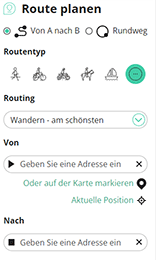
Mit RouteYou kannst du ganz einfach eigene Karten erstellen. Plane deine Route, füge Wegpunkte oder Knotenpunkte hinzu, plane Sehenswürdigkeiten und Einkehrmöglichkeiten ein und teile alles mit Familie und Freunden.
Routenplaner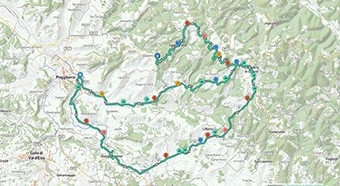
<iframe src="https://plugin.routeyou.com/poiviewer/free/?language=de&params.poi.id=9364253&params.language=en" width="100%" height="600" frameborder="0" allowfullscreen></iframe>

Mehr als 11.800.000 Routen

Mehr als 15.000.000 Benutzer

Mehr als 4.500.000 Sehenswürdigkeiten

Kerkstraat 108
9050 Gentbrugge,Belgien
© 2006-2026 RouteYou - www.routeyou.com