Source: Willem Vandenameele
Die ursprüngliche Kirche muss etwa Mitte des 14. Jahrhunderts erbaut worden sein, als Reaktion auf die Mudéjar-Ästhetik, die damals in den Kirchen Sevillas vorherrschend war.
Der Lauf der Zeit und die Schäden, die das Erdbeben von Lissabon im Jahr 1755 angerichtet hatte, machten den Abriss und den anschließenden Wiederaufbau erforderlich, der im Oktober 1841 abgeschlossen wurde . Die Kirche im neoklassizistischen Stil hat zwei Fassaden. Die Hauptfassade ist sehr monumental und weist die Besonderheit auf, dass sie zwei Doppeltürme hat, die ein kleines Atrium beherbergen.
Der Innenraum besteht aus drei Schiffen mit Querschiff und Presbyterium. Der Hauptaltar enthält die Statuen von San Ildefonso in der Mitte und San Pedro und San Pablo an den Seiten.
Source: Willem Vandenameele
 | | Public | Catalan • Danish • Dutch • English • French • Italian • Spanish

Select one of the most popular activities below or refine your search.
Discover the most beautiful and popular trails in the area, carefully bundled into appropriate selections.
Source: Willem Vandenameele
Select one of the most popular categories below or be inspired by our selections.
Discover the most beautiful and popular attractions in the area, carefully bundled in appropriate selections.
Source: Willem Vandenameele
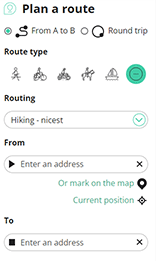
With RouteYou, it's easy to create your own customised maps. Simply plot your route, add waypoints or nodes, add places of interest and places to eat and drink, and then easily share it with your family and friends.
Route planner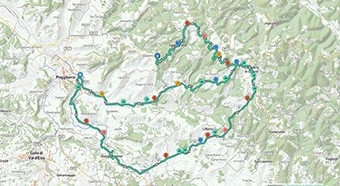
<iframe src="https://plugin.routeyou.com/poiviewer/free/?language=en&params.poi.id=8741980&params.language=de" width="100%" height="600" frameborder="0" allowfullscreen></iframe>

More than 10,100,000 routes

More than 15,000,000 users

More than 4,500,000 points of interest

Kerkstraat 108
9050 Gentbrugge, Belgium
© 2006-2025 RouteYou - www.routeyou.com