Source: Willem Vandenameele


The fountain was built in 1603 next to one of the main gateways in the city wall.
In 1929 it was moved to Largo de Camões . Its design and execution in Renaissance style are usually attributed to the famous Limiano master João Lopes, the "Old Man" . The fountain is of the Mannerist type with decorative elements that refer to the Manueline style, such as the constant use of figurative grotesque in the central column: frowns, acanthus leaves and bonfires and armillary spheres.
To finance its construction and the channeling of water from Merim, a tax was levied on the salt and olive oil sold in the city.
Because drinking water was so important and there was only one fountain in the city and the population often complained about it, an inscription was placed on a granite block next to the fountain with the fines for dirtying the fountain. If the offender was caught, he spent three days in prison the first time, and if he did it again the penalty was doubled. The inscription accompanied the fountain to Largo de Camões.
Source: Willem Vandenameele
 | | Public | Catalan • Danish • Dutch • French • German • Italian • Spanish

Select one of the most popular activities below or refine your search.
Discover the most beautiful and popular trails in the area, carefully bundled into appropriate selections.
Source: Willem Vandenameele
Select one of the most popular categories below or be inspired by our selections.
Discover the most beautiful and popular attractions in the area, carefully bundled in appropriate selections.
Source: Willem Vandenameele
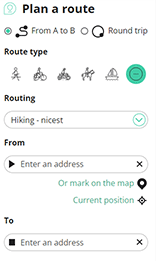
With RouteYou, it's easy to create your own customised maps. Simply plot your route, add waypoints or nodes, add places of interest and places to eat and drink, and then easily share it with your family and friends.
Route planner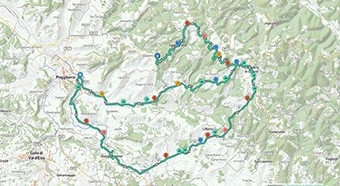
<iframe src="https://plugin.routeyou.com/poiviewer/free/?language=en&params.poi.id=9010603" width="100%" height="600" frameborder="0" allowfullscreen></iframe>

More than 10,100,000 routes

More than 15,000,000 users

More than 4,500,000 points of interest

Kerkstraat 108
9050 Gentbrugge, Belgium
© 2006-2026 RouteYou - www.routeyou.com