Le duché de Limbourg a été créé en 1839 en remplacement – et en continuation très partielle – du duché historique de Limbourg, qui avait existé jusqu’en 1795. Il englobait le territoire de l’actuelle province néerlandaise du Limbourg.
Guillaume Ier des Pays-Bas accepta un traité de paix avec la Belgique rebelle à condition qu’il récupère les parties orientales des provinces du Limbourg et du Luxembourg. Ces provinces avaient rejoint la Révolution belge et faisaient partie de la Belgique depuis 1830, à l’exception des fortifications de Luxembourg-Ville et de Maastricht, qui étaient restées aux mains de l’armée gouvernementale néerlandaise.
Source: Wikipedia.org
Copyright: Creative Commons 3.0
 Azure
Azure | | Public | Danish • Dutch • English • German • Italian • Spanish

Select one of the most popular activities below or refine your search.
Discover the most beautiful and popular trails in the area, carefully bundled into appropriate selections.
Select one of the most popular categories below or be inspired by our selections.
Discover the most beautiful and popular attractions in the area, carefully bundled in appropriate selections.
With RouteYou, it's easy to create your own customised maps. Simply plot your route, add waypoints or nodes, add places of interest and places to eat and drink, and then easily share it with your family and friends.
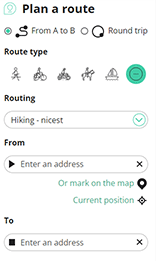
Route planner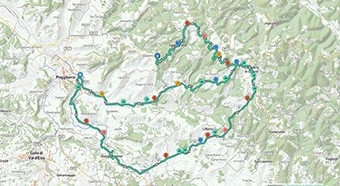
<iframe src="https://plugin.routeyou.com/poiviewer/free/?language=en&params.poi.id=5652376&params.language=fr" width="100%" height="600" frameborder="0" allowfullscreen></iframe>

More than 10,100,000 routes

More than 15,000,000 users

More than 4,500,000 points of interest

Kerkstraat 108
9050 Gentbrugge, Belgium
© 2006-2026 RouteYou - www.routeyou.com